Category: SEO

  • SEO for Kenyan Businesses: How to Rank on Google and Attract More Customers

    SEO for Kenyan Businesses: How to Rank on Google and Attract More Customers

    Most Kenyan businesses are invisible on Google. Here is how to fix that.

    When a potential customer in Nairobi searches for “best restaurant in Westlands” or “web designer near me,” Google returns a list of results. The businesses on page one get the clicks. Everyone else gets ignored.

    That is not speculation — research from Backlinko shows that the first result on Google captures over 27% of all clicks. The second page? Almost nobody scrolls that far.

    If your business website does not appear when customers search for your services, you are handing those customers directly to your competitors. Search Engine Optimization — SEO — is how you change that.

    SEO is the process of making your website more visible on search engines like Google. It is not a one-time task. It is an ongoing strategy that builds compounding results over time. Unlike paid advertising that stops the moment your budget runs out, SEO generates organic traffic that keeps growing.

    At Elon Designs, we build every website with SEO baked in from the foundation — not bolted on as an afterthought. This guide breaks down exactly how SEO works and how Kenyan businesses can use it to attract more customers.

    What Is SEO and Why Should Kenyan Businesses Care?

    Search Engine Optimization is the practice of improving your website so Google ranks it higher in search results. When someone types a query — say, “affordable dentist in Nairobi” — Google scans billions of pages and returns the ones it considers most relevant, trustworthy, and useful.

    Your job is to make your website one of those results.

    For Kenyan businesses, SEO matters more than ever. According to DataReportal’s 2024 Kenya Digital Report, Kenya has over 17 million internet users, and the vast majority access the web through mobile phones. They are searching for services, comparing options, and making purchasing decisions on Google every single day.

    SEO helps your business:

    • Appear where customers are already looking — Google search, Google Maps, and voice search
    • Build credibility without paid ads — ranking organically signals trust to potential customers
    • Generate leads 24/7 — your website works while you sleep, attracting visitors who are actively searching for what you offerz

    The Three Pillars of SEO

    Successful SEO strategies are built on three interconnected pillars. Ignoring any one of them weakens the entire structure.

    On-Page SEO

    On-page SEO is everything you control directly on your website. It tells Google what each page is about and whether it is worth showing to searchers.

    The key elements include:

    Title tags and headings — Every page needs a clear, keyword-rich title tag (the blue link in Google results) and a single H1 heading that tells both Google and visitors what the page covers.

    Keyword placement — Your target keywords should appear naturally in the page title, first paragraph, headings, and body text. The emphasis is on “naturally.” Stuffing keywords into every sentence is a penalty risk, not a ranking strategy.

    Meta descriptions — The short summary below your title in search results. A well-written meta description with a clear call to action improves your click-through rate.

    Image optimization — Every image should have a descriptive file name and alt text. Instead of “IMG_4521.jpg,” use “custom-website-design-nairobi.webp.” This helps Google understand your images and drives traffic from Google Image Search.

    Internal linking — Link related pages together within your site. If you have a page about e-commerce website design, link to it from your blog posts about online selling. This helps Google understand your site structure and distributes ranking authority across pages.

    Off-Page SEO

    Off-page SEO is your website’s reputation on the wider internet. Google uses signals from other websites to determine how trustworthy and authoritative your site is.

    The most important off-page factors:

    Backlinks — When reputable websites link to yours, Google treats it as a vote of confidence. A link from a respected Kenyan business directory or news publication carries real weight. Platforms like Clutch, DesignRush, and Sortlist are excellent starting points for Kenyan agencies and service businesses.

    Online reviews — Google reviews directly affect your local search ranking. Businesses with more positive reviews appear higher in map results and earn more trust from potential customers.

    Social signals and mentions — While social media links do not directly boost rankings, consistent brand mentions across platforms signal legitimacy to Google.

    Business citations — Your business name, address, and phone number (NAP) should be consistent across every directory, social profile, and listing. Inconsistencies confuse Google and weaken your local ranking.

    Technical SEO

    Technical SEO ensures your website works properly and that search engines can crawl and index it efficiently. You can have excellent content, but if your site is slow, broken, or hard to navigate, Google will not rank it well.

    Key technical factors:

    Page speed — Google has confirmed that site speed is a ranking factor. According to Google’s Web Vitals, your Largest Contentful Paint should be under 2.5 seconds. Compress images, use modern formats like WebP, enable caching, and choose fast hosting. At Elon Designs, our clients host on Cloudelona — part of the Elona Group ecosystem — which is configured specifically for speed and uptime.

    Mobile-friendly design — Google uses mobile-first indexing, meaning it primarily looks at the mobile version of your site for ranking. If your site is not responsive, your rankings will suffer. Every website we build at Elon Designs is mobile-first by default.

    HTTPS security — Sites without SSL certificates are flagged as “Not Secure” in Chrome. Google ranks HTTPS sites higher than HTTP sites. SSL is included in every hosting plan on Cloudelona.

    Clean site structure — Logical navigation, proper URL structure, XML sitemaps, and structured data (schema markup) all help Google crawl and understand your website. This is the foundation that our web design process is built on.

    Local SEO: Reaching Customers in Your Area

    For businesses serving specific locations — a restaurant in Kilimani, a clinic in Westlands, a school in Karen — local SEO is where the biggest wins happen.

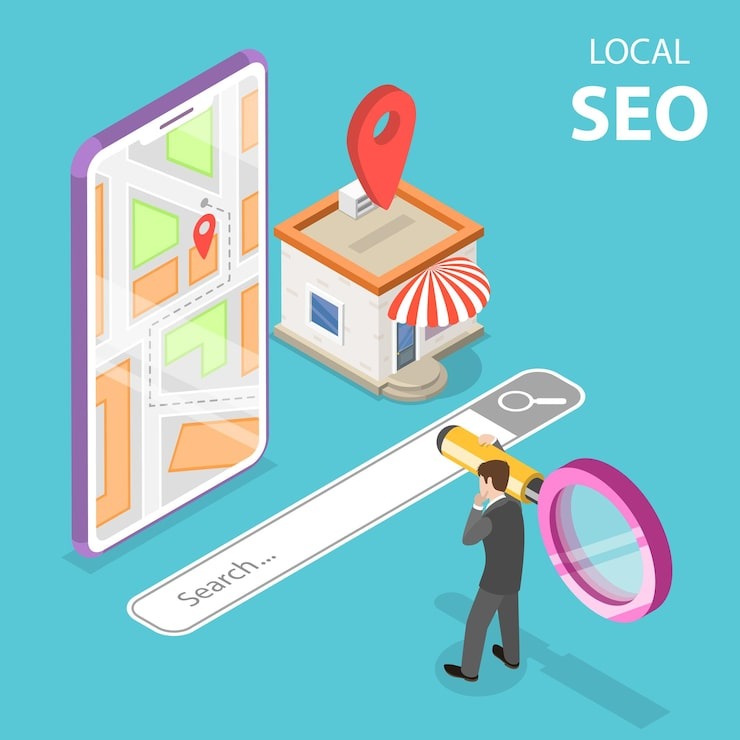
    When someone searches “dentist near me” or “best salon in Nairobi CBD,” Google shows a map pack with three local results above the regular search results. Getting into that map pack can transform your business.

    Here is how to optimize for local search:

    Claim and optimize your Google Business Profile — This is non-negotiable. Add your business name, address, phone number, hours, photos, and services. According to Google’s own data, businesses with complete profiles are 70% more likely to attract location visits.

    Use location-based keywords — Add your city and neighbourhood to page titles, meta descriptions, and content. Instead of “best web designer,” target “best web designer in Nairobi.” Instead of “affordable catering,” target “affordable catering Mombasa.”

    Collect Google reviews consistently Ask satisfied customers to leave reviews. Respond to every review, positive or negative. Volume, recency, and rating all affect your local ranking.

    Maintain consistent NAP data — Your business name, address, and phone number must be identical everywhere it appears online — your website, Google Business Profile, Facebook, directories, and listings.

    Common SEO Mistakes Kenyan Businesses Make

    Knowing what not to do is just as important as knowing the right strategy. These are the mistakes we see most often:

    Keyword stuffing — Repeating “best web design company in Kenya” fifteen times on a page does not help you rank. It hurts you. Google’s algorithms are sophisticated enough to detect unnatural keyword usage and penalize it. Some Kenyan agencies still do this — their sites read like spam, and Google will eventually catch up.

    Ignoring mobile optimization — With the majority of Kenyan internet users on mobile devices, a site that looks broken on a phone is a site that loses customers and rankings simultaneously.

    Duplicate or thin content — Pages with less than 300 words, copied content, or auto-generated text provide no value to users. Google filters these out of results.

    Neglecting page speed — A site that takes 8 seconds to load on a 4G connection in Nairobi loses most visitors before they see your content. Invest in proper hosting and image optimization.

    Skipping Google Business Profile — Free visibility that many Kenyan businesses ignore entirely. If you serve local customers and have not claimed your Google Business Profile, you are leaving easy wins on the table.

    SEO Is a Long-Term Investment, Not a Quick Fix

    Paid ads on Google or Facebook deliver instant visibility the moment you stop paying, the traffic stops. SEO works differently. It builds slowly, but the results compound over time.

    A well-optimized page can rank for months or years, bringing in hundreds of visitors per month without any additional spend. The businesses that invest in SEO consistently are the ones that dominate search results while their competitors keep paying for every single click.

    Even small improvements — adding location keywords to your page titles, writing proper meta descriptions, fixing slow-loading images — create measurable results. SEO rewards consistency and quality over time.

    How to Get Started With SEO for Your Kenyan Business

    If you are starting from scratch, here is a practical starting point:

    • Claim your Google Business Profile and complete every field
    • Run an SEO audit on your current website to identify technical issues and keyword gaps
    • Fix on-page basics — title tags, meta descriptions, H1 headings, image alt text
    • Create useful content — blog posts, guides, and FAQs that answer questions your customers actually ask
    • Build backlinks by getting listed on directories and earning mentions from relevant websites

    Monitor your progress using Google Search Console — it is free and shows exactly how Google sees your site.

    If this feels overwhelming, you do not have to do it alone.

    Get a Free SEO Audit

    Want to know how your website performs on Google right now?

    A professional SEO audit reveals:

    • Technical issues holding your site back
    • Keyword opportunities you are missing
    • Content gaps your competitors are filling
    • Quick wins that can improve rankings within weeks

    At Elon Designs, we offer free SEO audits for Kenyan businesses. We will analyze your site, show you exactly where you stand, and give you a clear action plan.

    Get started today:

    📧 [email protected]

    📞 Call / WhatsApp: +254 724 636 436

    🌐 elondesigns.com/contact

  • How AI Is Redefining SEO in 2026: 7 Strategies for Entrepreneurs  to Stay Visible

    How AI Is Redefining SEO in 2026: 7 Strategies for Entrepreneurs  to Stay Visible

    AI has transformed SEO from a game of keywords to an intent-driven pursuit of authority. Google’s AI Overviews now handle 30%+ of queries with zero-click answers, rewarding structured, trustworthy content over tricks.

    For entrepreneurs, this means adapting fast: high-quality niche content outranks volume, leveling the field against big brands.

    AI’s Core Shifts in SEO

    Search engines now prioritize semantic understanding over keyword density.

    Traditional SEO (Pre-2026)AI SEO (2026)
    Keyword stuffingUser intent matching [Google 2025 updates]
    Backlink volumeTopical depth & E-E-A-T (Experience, Expertise, Authoritativeness, Trustworthiness)
    10 blue linksAI summaries, voice results, personalized feeds
    Page rankingsEntity-based visibility across platforms

    AI evaluates: Does this solve the query? Is it fresh and structured? Result: 40% of traffic now comes from discovery formats like featured snippets.

    7 Strategies to Stay Visible

    Focus on these proven tactics.

    1. Prioritize Intent Over Keywords
      In 2026, AI-powered search engines no longer rank pages simply because they contain keywords. They rank content based on search intent, which is the real reason someone typed a query. Intent generally falls into three categories: informational, transactional, and navigational. Entrepreneurs who understand this shift create content that matches user intent precisely rather than chasing keyword volume.

    For example, someone searching “SEO for startups” may not want a definition. They may want tools, pricing, timelines, or ROI expectations. A smart SaaS founder builds a content cluster that answers all of these related questions. This approach increases dwell time, reduces bounce rate, and signals to AI that the site fully satisfies the searcher’s needs, often doubling engagement and visibility.

    1. Build Topical Authority
      AI favors websites that own a topic instead of touching it lightly. Topical authority means publishing multiple interconnected pieces of content that comprehensively cover one niche. Instead of writing one blog post about SEO, entrepreneurs should create ten to fifteen related posts that link together logically, forming a clear knowledge hub.

    This structure helps AI understand that your site is a reliable source on the subject. Brands like HubSpot have proven that topic clusters outperform siloed content, driving up to three times more organic traffic. For entrepreneurs, this means focusing on depth over breadth and becoming known for one thing before expanding into others.

    1. Structure for AI Parsing
      AI systems rely heavily on structure to understand and extract information. Well-organized content using clear headings, short paragraphs, bullet lists, and tables is easier for AI to parse and more likely to be featured in AI-generated answers, snippets, and summaries.

    More than seventy percent of featured snippets come from pages with strong structural clarity. Tools like Rank Math help entrepreneurs optimize readability and hierarchy. Aiming for a readability score above ninety ensures both humans and machines can easily consume the content. Structure is no longer cosmetic. It is a ranking signal.

    1. Optimize Technical Foundations
      No matter how good your content is, poor technical performance can block visibility. AI-driven search prioritizes websites that load fast, work seamlessly on mobile, and provide stable user experiences. Core Web Vitals remain critical benchmarks, including fast load times, quick interaction, and visual stability.

    Slow or poorly optimized sites are less likely to be recommended by AI systems and can lose up to fifty percent of potential visibility. Entrepreneurs must treat technical SEO as infrastructure. Clean URLs, mobile-first indexing, and structured data form the foundation upon which all AI-driven discovery depends.

    1. Embed Trust Signals
      AI has become far more sensitive to credibility and trust. Search engines now evaluate who created the content, why it exists, and whether it demonstrates real experience. Adding author bios, original insights, client testimonials, and real-world examples helps AI assess expertise and authenticity.

    Since the post-2025 Helpful Content updates, thin or purely AI-spun content is increasingly penalized. Websites that demonstrate strong Experience, Expertise, Authoritativeness, and Trustworthiness rank significantly higher, especially in sensitive niches like finance, health, and business services. For entrepreneurs, trust is no longer optional. It is algorithmic.


    Metric: E-E-A-T sites rank 25% higher in YMYL (Your Money Your Life) niches.

    1. Leverage Multi-Modal Discovery
      Search is no longer limited to text. In 2026, users discover brands through voice search, image search, video results, and AI chat interfaces. Entrepreneurs must optimize content to be discoverable across all these formats by using descriptive alt text, schema markup, and clear, quotable answers.

    This multi-modal approach also fuels Generative Engine Optimization. Content that AI tools like ChatGPT or Perplexity can easily cite often drives up to forty percent more branded searches. Visibility today means being understandable not just to Google but to every AI system summarizing the web.

    1. Update Relentlessly
      AI favors freshness. Content that remains static quickly loses relevance, even if it once ranked well. Entrepreneurs who update content quarterly by adding new statistics, examples, and case studies send strong signals that their information is current and reliable.

    Regular updates can boost rankings by up to twenty percent. Tools like Ahrefs and Search Console help identify content decay, allowing entrepreneurs to refresh pages before traffic drops. In 2026, SEO is not publish and forget. It is publish, refine, and evolve.

    Real-World Impact

    A Nairobi startup niche-mastering “AI SEO for e-commerce” saw 150% traffic growth in 2025 by implementing clusters + schema outpacing generic competitors.

    Action Plan

    • Week 1: Audit top pages for intent gaps.
    • Month 1: Build one topic cluster.
    • Ongoing: Monitor AI Overviews via Google Search Console.

    SEO thrives in 2026 as a business asset, not a hack. Entrepreneurs who educate and structure win visibility.

    FAQ

    1. Is SEO still relevant in 2026 with AI?

    Yes. SEO is more relevant than ever, but it has evolved. AI has made SEO smarter, focusing on intent, quality, and trust rather than shortcuts.

    1.  Can AI-generated content rank on Google?

    AI-generated content can rank only if it is valuable, accurate, and helpful. Low-quality or copied AI content performs poorly.

    1. Do entrepreneurs still need keywords in 2026?

    Yes, but keywords are now used for context and clarity, not stuffing. Understanding search intent matters more.

    1. How does AI affect small businesses and startups?

    AI levels the playing field. Small businesses with high-quality, focused content can outrank larger brands that publish shallow material.

    1. What is the biggest SEO mistake entrepreneurs make in 2026?

    Publishing content without a clear audience, purpose, or structure — and ignoring how AI interprets their website.

    1. . How can Elon Designs help with AI-driven SEO?

    Elon Designs helps entrepreneurs with SEO strategy, website structure, content planning, and AI-ready digital visibility.

    Ready to audit your site? Start with intent mapping at 

    elondesigns.com

    or Contact Our Team for a Free Consultation.

    Email: [email protected]

    Call /WhatsApp:0724 636 436

    .

  • 7 Proven Ways Local SEO Helps Small Businesses Get More Customers.

    7 Proven Ways Local SEO Helps Small Businesses Get More Customers.

    Key Takeaways:

    • Visibility = Revenue: If they can’t find you on Maps, they can’t pay you.
    • High Intent: Local searchers are ready to buy now.
    • Trust Factor: 5-star reviews on Google work better than paid ads.
    • Mobile Dominance: Most Kenyans search for businesses on their phones while on the move.

    Many small businesses in Kenya offer amazing products. You might have the best cakes in Westlands or the most skilled mechanics in Industrial Area.

    But you have a problem: Visibility.

    People today do not drive around looking for signs. They pull out their phones and type “Cake shop near me” or “Mechanic around me.” If your business does not appear in those top 3 map results, you technically do not exist to them.

    This is where Local SEO for small businesses changes the game. It connects you to customers who are holding their wallets, ready to buy.

     What Is Local SEO? 

    Local SEO is the process of optimizing your online presence so you appear in search results for a specific physical location.

    Unlike general SEO (which tries to reach the whole world), Local SEO focuses on your neighborhood.

    • General Search: “Best coffee recipes” (Information)
    • Local Search: “Best coffee shop in Kilimani” (Action)

    How It Works:

    1. User Searches: “Plumber near me.”
    2. Google Checks: Uses GPS to find businesses close to the user.
    3. Result: Your business pops up with a “Call” or “Directions” button.
    4. Action: You get a customer.

     The 7 Proven Ways Local SEO Grows Your Business

    Why is this the most powerful tool for small businesses? Here are the 7 specific ways it drives revenue.

    1. It Captures “High-Intent” Customers. People searching locally aren’t just browsing; they are ready to act. Data shows that 76% of people who search for a local business on their phone visit a store within 24 hours.

    2. It Levels the Playing Field. You don’t need the budget of Safaricom or Jumia to win. Google Maps ranks based on relevance and distance, not just budget. A small local shop can easily outrank a giant corporation in the local results.

    3. It builds Instant Trust (Social Proof) When a customer sees your business with a 4.8-star rating and glowing reviews, they trust you immediately, even before they meet you.

    4. It Increases Foot Traffic For physical businesses (salons, clinics, restaurants). Local SEO acts like a digital signpost. It directs people from the search bar straight to your front door.

    5. It Boosts Mobile Visibility In Kenya mobile is king. Local SEO is specifically designed for mobile screens, giving users big buttons to “Call Now” or “Get Directions” without needing to visit your website first.

    6. It is Cost-Effective. Unlike paid ads (where you pay for every click), traffic from Google Maps is free. Once you rank, you get organic leads 24/7 without spending a shilling on ads.

    7. It Delivers Long-Term ROI A newspaper ad works for one day. A flyer works until it is thrown away. But a strong Local SEO ranking works for years, bringing in a steady stream of customers month after month.

    Key Elements: The “Big 3” of Ranking

    To succeed with Local SEO for small businesses, you need to focus on these three pillars.

    1. Google Business Profile (The Foundation) This is non-negotiable. You must claim and verify your profile. Ensure you have:

    • Accurate Business Name.
    • Correct Address (Pin location).
    • Real photos of your work/office.

    2. NAP Consistency NAP stands for Name, Address, Phone. Google gets confused if your Facebook page says “Nairobi Road” but your website says “Nairobi Rd.” Ensure your details are identical everywhere.

    3. Local Keywords Don’t just say “We sell shoes.” Say “We sell men’s leather shoes in Nairobi CBD.” Use location names in your website content and blog posts.

    Common Mistakes That Hide Your Business

    • Ignoring Reviews: Never leave a review unanswered. Even a simple “Thank you” tells Google you are active.
    • Fake Reviews: Never buy reviews. Google will catch you and ban your listing.
    • Wrong Categories: Don’t choose “Store” if you are a “Shoe Store.” Be specific.

    Your 5-Step “Get Started” Checklist

    You don’t need to be a tech expert to start today:

    1. ✅ Claim your Google Business Profile.
    2. ✅ Fill in every section (Description, Hours, Services).
    3. ✅ Upload at least 5 high-quality photos.
    4. ✅ Ask 3 loyal customers to leave a review today.
    5. ✅ Embed a Google Map on your website’s “Contact Us” page.

    Frequently Asked Questions (FAQ)

    How long does Local SEO take to work?

     It typically takes 3 to 6 months to see significant results, but claiming your profile can yield quick wins in weeks.

    Do I need a website for Local SEO? 

    While you can rank on Maps without one, having a website linked to your profile significantly boosts your ranking power.

    Why is my competitor ranking higher than me?

     They likely have more positive reviews, more photos, or a more complete profile with consistent NAP details across the web.

    Stop Being Invisible

    Local SEO is not just a marketing tactic; it is survival. If your business serves people in a specific area, you cannot afford to be invisible.

    By optimizing for Local SEO, you stop chasing customers and start letting them find you.

    Need help ranking #1 in your neighborhood? At Elon’s Design, we specialize in turning local businesses into local leaders.

    📍 Get Your Free Local SEO Audit Today

  • SEO Isn’t Dead, It’s Just Smarter: How Modern Brands Win Search in 2025

    SEO Isn’t Dead, It’s Just Smarter: How Modern Brands Win Search in 2025

    Let’s be honest here, for years I’ve heard people say that SEO is dead, usually after a major Google update or when a new platform starts getting attention. But the truth is, it has evolved, and the winning brands in 2025 are the ones that have evolved with it. The deal is that it became more human, more intelligent, and a lot more strategic. Search is not about cramming keywords into a blog anymore. It’s about showing up where people are searching, whether that’s on Google, TikTok, or inside an AI chat box, and giving them the most relevant, honest answer in the most engaging format. 

    Let’s break down how smart brands are adapting:

    1. Search Is Everywhere, Not Just Google.

    In 2015, Google accounted for about 90% of global search traffic. Today, people search across dozens of platforms. According to a 2025 DataReportal study, over 51% of Gen Z users now use TikTok or Instagram as their first stop for information. Pinterest has become a visual search engine, Amazon dominates product discovery, and even ChatGPT, Gemini, and Perplexity are now search gateways powered by AI summaries. That means SEO isn’t just “Search Engine Optimization,” it’s Search Everywhere Optimization. Modern brands repurpose their message across platforms:

    • Optimized images for Pinterest
    • FAQs and structured data for Google
    • Conversational answers for AI tools

    2. Human Signals Now Matter More Than Algorithms

    Google’s Search Generative Experience (SGE) and AI-based ranking systems are obsessed with useful experiences, not mechanical optimization. The algorithm now measures how people interact with your content: do they stay, scroll, click deeper, or bounce?

    Here’s what matters most in 2025:

    • Intent clarity: Your content should answer what people are really asking, not what you think they’re asking.
    • Natural tone: Write the way your customers talk. Skip the jargon. Focus on clarity and empathy.
    • Engagement depth: Use mixed-media visuals, infographics, polls, or short videos to maintain close attention.

    3. Topical Depth Beats Keyword Density

    Old-school SEO used to be about stuffing dozens of keywords into a 1,000-word post. That’s ancient history.

    In 2025, the winners build topic clusters of interlinked articles that explore a theme in depth. For example, a digital agency might create a “Small Business SEO” hub, then link it to posts like:

    • “How Local SEO Works in Nairobi”
    • “Best Free SEO Tools for Startups”
    • “Google My Business Optimization Tips”

    This approach signals authority to Google, and it helps readers navigate your site like a series of lessons, not random posts. The result? More time on site, stronger trust, and better rankings over time.

    4. AI + SEO = Personalization

    With AI, search has been reshaped faster than ever. When users type into Google or an AI assistant, results are reflected by their search history, location, and preferences. That means two people can search the same phrase, but see totally different results. Smart brands are responding with dynamic, data-informed content:

    • Personalized landing pages
    • AI-generated product recommendations
    • Chatbots that guide users to what they need instantly

    The best SEO strategy today is one that feels tailored, not templated. People don’t just want to find you; they want to feel like you understand them.

    5. Branding Is the New Backlink

    In the past, backlinks were referred to as the holy grail, a prized asset. Now, your brand acts as your strongest SEO signal. That’s why modern SEO and branding are inseparable.

     In general, the more your brand gets mentioned, shared, and searched for by name, the stronger your organic presence becomes. If your audience trusts you, algorithms will too.

    So, Is SEO Really Dead?

    Not at all. It’s just matured. 

    The current SEO is about connection, credibility, and context. It’s about creating genuine experiences that make people stop, stay, and share.

    Far from it. The game has simply evolved. The optimization is no longer for a machine’s algorithm, but for a human’s intuition. Google does not just understand the winning brands; their people understand them.  

  • SEO Isn’t Dead, It’s Just Smarter: How Modern Brands Win Search in 2025

    SEO Isn’t Dead, It’s Just Smarter: How Modern Brands Win Search in 2025

    Let’s be honest here, for years I’ve heard people say that “SEO is dead”, usually after a major Google update or when a new platform starts getting attention. But the truth is, it has evolved, and the winning brands in 2025 are the ones that have evolved with it. The deal is that it became more human, more intelligent, and a lot more strategic. Search is not about cramming keywords into a blog anymore. It’s about showing up where people are searching, whether that’s on Google, TikTok, or inside an AI chat box, and giving them the most relevant, honest answer in the most engaging format. 

    Let’s break down how smart brands are adapting:

    Search Is Everywhere, Not Just Google.

    In 2015, Google accounted for about 90% of global search traffic. Today, people search across dozens of platforms. According to a 2025 DataReportal study, over 51% of Gen Z users now use TikTok or Instagram as their first stop for information. Pinterest has become a visual search engine, Amazon dominates product discovery, and even ChatGPT, Gemini, and Perplexity are now search gateways powered by AI summaries. That means SEO isn’t just “Search Engine Optimization,” it’s Search Everywhere Optimization. Modern brands repurpose their message across platforms:

    • Captions and hashtags for TikTok and Reels
    • Optimized images for Pinterest
    • FAQs and structured data for Google
    • Conversational answers for AI tools

    Human Signals Now Matter More Than Algorithms

    Google’s Search Generative Experience (SGE) and AI-based ranking systems are obsessed with useful experiences, not mechanical optimization. The algorithm now measures how people interact with your content: do they stay, scroll, click deeper, or bounce?

    Here’s what matters most in 2025:

    • Intent clarity: Your content should answer what people are really asking, not what you think they’re asking.
    • Natural tone: Write the way your customers talk. Skip the jargon. Focus on clarity and empathy.
    • Engagement depth: Use mixed-media visuals, infographics, polls, or short videos to maintain high attention.

    Topical Depth Beats Keyword Density

    Old-school SEO used to be about stuffing dozens of keywords into a 1,000-word post. That’s ancient history.

    In 2025, the winners build topic clusters of interlinked articles that explore a theme in depth. For example, a digital agency might create a “Small Business SEO” hub, then link it to posts like:

    • “How Local SEO Works in Nairobi”
    • “Best Free SEO Tools for Startups”
    • “Google My Business Optimization Tips”

    This approach signals authority to Google, and it helps readers navigate your site like a series of lessons, not random posts. The result? More time on site, stronger trust, and better rankings over time.

    AI + SEO = Personalization

    With AI, search has been reshaped faster than ever. When users type into Google or an AI assistant, results are reflected by their search history, location, and preferences. That means two people can search the same phrase, but see totally different results. Smart brands are responding with dynamic, data-informed content:

    • Personalized landing pages
    • AI-generated product recommendations
    • Chatbots that guide users to what they need instantly

    The best SEO strategy today is one that feels tailored, not templated. People don’t just want to find you; they want to feel like you understand them.

    Branding Is the New Backlink

    In the past, backlinks were referred to as the holy grail, a prized asset. Now, your brand acts as your strongest SEO signal. That’s why modern SEO and branding are inseparable.

     In general, the more your brand gets mentioned, shared, and searched for by name, the stronger your organic presence becomes. If your audience trusts you, algorithms will too.

    So, Is SEO Really Dead?

    Not at all. It’s just matured. 

    The current SEO is about connection, credibility, and context. It’s about creating genuine experiences that make people stop, stay, and share.

    Far from it. The game has simply evolved. The optimization is no longer for a machine’s algorithm, but for a human’s intuition. The winning brands aren’t just understood by Google; they are understood by their people.  

  • What is SEO and Why Does It Matter?

    What is SEO and Why Does It Matter?

    1. What is SEO and Why It Matters.

    SEO(Search Engine Optimization) is the process of optimizing your content to be discovered through the search engine’s organic search results.

    Unlike paying for ads, search traffic is free.

    WHY? When your site appears on the first page, one has the

    opportunity to reach a massive audience.

    2. How Search Engines Work

    Google works by using crawling and indexation that visit websites and rank them based on how useful or relevant it is to what searchers are searching for.

    3. Types of SEO.

    There are three parts of SEO:

    > On-page SEO: It’s the practice of optimizing web pages to rank

    higher in search engines.

    > Off-page SEO: It builds your website’s reputation through

    backlinks, social media sharesand mentions.

    > Technical SEO: It makes your website load faster, mobile-friendly,

    and easy for Google to understand.

    They work together to make your website more visible.

    4. Keyword Research

    Keywords are words and phrases that people type into search engines to find what they’re looking for, while keyword research is the process of finding keywords that people are inputting into search engines.

    A keyword is important because it sets the entire foundation for search engine optimization.

    You can use tools like Google Keyword Planner to find popular keywords.

    5. Creating High Quality Content

    By checking if your keyword has search demand, the search engines reward the most helpful, original, and well-written content where possible.

    The goal is to make your readers stay longer and enjoy your content.

    6.Link Building Strategies

    It’s the process of getting other websites to link to a page on your website.

    Post helpful and interesting content that people will want to refer to. Some of the common stages in link building are: Prospecting, Vetting, and email outreach.

    7. Technical SEO Fundamentals

    Technical SEO is about optimizing your website to help search engines find, understand, and index your pages.

    Some of the key things to look out for are:

    >Quick loading time

    > HTTPS secure connection

    >Mobile responsiveness optimizations benefit both search engines and users, providing a good experience.

    8. User Experience (UX) and SEO

    An attractive website that’s easy to use keeps visitors longer, something Google loves.

    Keep your pages easy to navigate, load quickly, and display well on mobile, thus people enjoy visiting your website, and hence ranking improves.

    9. Tracking Your SEO Performance

    You can’t optimise what you don’t have. With tools like Google Analytics and Google Console, one can track their performance.

    .

    These tools show you: how many visits you have, which are your most popular pages and keywords, hence planning your content better and ranking more effectively.

    10. The Future of SEO

    SEO is constantly changing. Here are some trends shaping its

    future:

    > Voice search, eg, Axela or Google Assistant

    > AI-powered search engines

    > Mobile first indexing

    Staying on top of these trends will keep your website competitive.

    Conclusion

    In conclusion, SEO is mainly done in the Google search result page, also known as SERP, which highlights the best-performing websites, thus increasing sales for a certain business, and requires effective strategies and backlinking. With these ten reasons, one can stabilize the website.