Author: Elon

  • 3 Types of Web Hosting You Should Consider in 2026 as an Entrepreneur 

    3 Types of Web Hosting You Should Consider in 2026 as an Entrepreneur 

    What is Web Hosting and Why Does it Matter?

    The three most effective web hosting types in 2026 are Shared NVMe Hosting for beginners, Virtual Private Servers (VPS) for growing agencies, and Managed Cloud Hosting for high-traffic enterprises. While shared hosting remains the most affordable entry point, the rise of “Interaction to Next Paint” (INP) as a critical SEO metric means that migrating to VPS or Managed Cloud is now a strategic necessity for any business looking to rank on the first page of AI-driven search results. The Evolving Landscape of Web Hosting in 2026: A Strategic Imperative

    The year 2026 marks a significant inflection point in the web hosting industry, driven by escalating performance demands and the critical influence of Artificial Intelligence (AI) on search engine ranking algorithms. No longer is web hosting a mere commodity; it is a foundational strategic asset directly impacting a business’s discoverability, user experience, and bottom line.

    Currently, the hosting landscape is neatly segmented into three dominant tiers, each catering to distinct business needs and growth stages:

    1. Shared NVMe Hosting: The Entry Point (Ideal for New Users and Startups)

    In 2026, “Basic Shared Hosting” will be replaced by Shared NVMe Hosting. Unlike the slow HDD or SATA SSD drives of the past, NVMe (Non-Volatile Memory Express) storage connects directly to the server’s PCIe bus, offering data transfer speeds up to 10x faster than traditional SSDs.

    Who it’s for:

    • New bloggers and personal portfolios.
    • Local businesses in Kenya that are just starting their digital journey.
    • Small sites with under 10,000 monthly visitors.

    The 2026 Edge:

    Modern shared hosts now include AI-driven resource management. This technology prevents the “noisy neighbor” effect, where one site’s traffic spike slows down everyone else on the server by using AI to dynamically isolate and throttle resource-heavy scripts in real-time.

    This tier remains the most economical and accessible starting point for new websites, blogs, and small projects. The key differentiator in 2026 is the ubiquitous adoption of Non-Volatile Memory Express (NVMe) storage. This modern, high-speed storage technology, replacing older SATA and even standard SSDs, provides a dramatic performance uplift, ensuring that even the lowest-cost hosting option offers reasonable speed.

    • Key Advantage: Lowest cost, simplicity of use, and included control panels.
    • Best Suited For: First-time website owners, personal blogs, very small business sites, and low-traffic proof-of-concept projects.

    2. Virtual Private Servers (VPS): The Growth Accelerator (Perfect for Expanding Agencies and SMEs)

    A VPS uses virtualization technology to give you dedicated resources on a shared physical machine. In 2026, the standard is KVM (Kernel-based Virtual Machine) virtualization, which ensures that your allocated RAM and CPU are strictly yours and cannot be “borrowed” by other users.

    Why it’s a Game-Changer for Agencies:

    For digital marketers and administrators at companies like Elon Designs Ltd, a VPS offers the control needed to run custom marketing scripts and heavy design tools without lag.

    • Root Access: You can install custom server-side software (like specialized SEO crawlers).
    • Dedicated IP: Reduces the risk of being blacklisted due to another site’s spammy behavior, a common issue in shared environments.
    • Scalability: You can “hot-swap” or add more RAM and CPU cores during a major marketing campaign without any downtime.

    Technical Note: In 2026, look for VPS providers offering Cloud-hosted Control Panels. These allow you to manage your server through a simple interface (like hPanel or a modern cPanel) while keeping the raw power of a dedicated environment.

    The Virtual Private Server (VPS) environment represents the essential middle ground, offering a perfect blend of dedicated resources, control, and scalability at a moderate price. A VPS partitions a physical server into several virtual environments, with each user guaranteed a specific allocation of CPU, RAM, and storage. This isolation eliminates the “noisy neighbor” effect common in shared hosting, where one high-traffic site can slow down all others.

    • Key Advantage: Dedicated resources, root access for custom configuration, superior stability, and enhanced security.
    • Best Suited For: Growing small-to-medium enterprises (SMEs), e-commerce stores, web development agencies managing multiple client sites, and applications requiring custom software stacks.

    3. Managed Cloud Hosting: The Enterprise Powerhouse (The Go-To for High-Traffic, Mission-Critical Businesses)

    Managed Cloud Hosting is the “gold standard” for 2026. Instead of your site sitting on one physical server, it lives on a network of interconnected virtual servers. If one server fails, another takes over instantly.

    The “Managed” Advantage:

    The “Managed” part means the host handles the heavy lifting:

    • Automatic Core Updates: WordPress, PHP, and security patches are handled for you.
    • Edge Computing: Your site’s HTML is cached at “Edge” nodes globally, meaning a user in Nairobi sees your site just as fast as a user in New York.
    • Predictable Pricing: Unlike older cloud models, 2026 providers often offer “Capped Pricing” to avoid surprise bills from traffic surges.

    Essential for SEO:

    Managed Cloud hosts are now built with Generative Engine Optimization (GEO) in mind. They provide the extreme speed and structured data uptime required for AI agents (like Gemini or ChatGPT) to crawl and cite your website as a reliable source.

    Managed Cloud Hosting stands as the premier solution for businesses that cannot afford a moment of downtime and experience unpredictable, massive traffic spikes. This model leverages a distributed network of servers, allowing resources (like CPU power and memory) to be scaled up or down instantly and automatically in response to demand. The “managed” aspect ensures that all server maintenance, security updates, and performance tuning are handled by the provider’s expert team.

    • Key Advantage: Near-infinite scalability, unparalleled reliability, built-in redundancy, automatic load balancing, and expert maintenance.
    • Best Suited For: Large e-commerce platforms, enterprise applications, high-traffic media outlets, SaaS (Software as a Service) companies, and sites with global audiences.


    Which One Should You Choose?

    FeatureShared NVMeVPS HostingManaged Cloud
    PerformanceModerate (Fast Burst)High (Consistent)Elite (Global Edge)
    Price (Monthly)KES 500 – KES 1,500KES 2,500 – KES 8,000KES 4,500+
    Technical SkillZero (Beginner)IntermediateLow (Host Manages It)
    Best ForStartupsAgencies / Digital MarketersE-commerce / Global Brands


    The Strategic Imperative: The Rise of INP and AI-Driven SEO

    While Shared NVMe Hosting offers a cheap start, the shift in search engine optimization (SEO) priorities makes an upgrade a necessary strategic move for any business aiming for market visibility. The driving force behind this is the increasing importance of the Core Web Vitals metric “Interaction to Next Paint” (INP).

    INP measures the responsiveness of a website by evaluating the time from when a user interacts with a page (e.g., clicking a button or link) to the moment the browser paints the next visual frame. In 2026, INP has become a key ranking factor, reflecting Google’s focus on real-world user experience. A poor INP score, often caused by slow server response times or insufficient computational power (common issues on overloaded shared servers), can directly impede a site’s ability to achieve a top ranking.

    This performance requirement, coupled with the reliance of modern search results on AI-driven algorithms that prioritize fast, responsive, and seamless user journeys, means that migration to a VPS or Managed Cloud environment is crucial. Businesses serious about competing in today’s digital landscape must view this hosting upgrade not as an expense, but as a mandatory investment in site performance, SEO health, and, ultimately, sustained business success.

    Frequently Asked Questions

    1. Is shared hosting still a good idea in 2026?

    Yes, but only if it uses NVMe storage. In 2026, standard HDD or older SSD shared hosting will be too slow for modern search engines. Shared hosting is ideal for sites with under 25,000 monthly visits. However, if you are running an e-commerce store or a site with heavy dynamic content (like a learning management system), the “noisy neighbor” effect of shared hosting may hurt your performance.

    2. How does hosting affect my SEO in 2026?

    Hosting is now a primary SEO factor. Google’s Core Web Vitals and the new INP (Interaction to Next Paint) metric measure how fast your server responds.

    • Latency: High latency can lead to “zero-click” abandonment.
    • AI Crawling: If your server is slow, AI agents (like Gemini or ChatGPT) may fail to index your content, meaning your site won’t be cited in AI search summaries.

    3. Do I need technical skills to use a VPS?

    Not necessarily. In 2026, most providers offer Managed VPS options. This gives you the power of a private server while the hosting company handles security patches, server updates, and backups. If you choose an unmanaged VPS, you will need to be comfortable with the Command Line Interface (CLI) and server hardening.

    4. What is “Green Hosting,” and why is everyone talking about it?

    Green hosting refers to data centers powered by 100% renewable energy or those that purchase carbon offsets. In 2026, sustainability has become a “trust signal.” Many corporate clients now require their partners to use eco-friendly infrastructure as part of their ESG (Environmental, Social, and Governance) goals.

    5. Can I host a Kenyan business on a US or European server?

    You can, but it may increase your TTFB (Time to First Byte) for local visitors. For businesses targeting customers in Nairobi or Limuru, it is best to use a provider with an Edge node in Kenya or a local host like HostAfrica. This ensures that the data doesn’t have to travel across the ocean, making your site feel “instant” to local users.

    6. Why is my renewal price so much higher than the signup price?

    This is a common “introductory rate” tactic. In 2026, savvy marketers check the Renewal Transparency policy. Always look for the “post-offer” pricing in the fine print. Some modern hosts are moving toward Flat-Rate Pricing, where the price you sign up with is the price you pay forever.

    7. What security features are “must-haves” this year?

    At a minimum, your 2026 hosting plan should include:

    • Free SSL (TLS 1.3): Essential for encryption.
    • Automated Daily Backups: Preferably stored in a different physical location (Off-site).
    • DDoS Protection: To block malicious traffic spikes.
    • WAF (Web Application Firewall): To stop bot attacks before they reach your WordPress dashboard.

    Ready for a faster website? Click here: cloudelona.com to View Our Secure Hosting Packages or Contact Our Team for a Free Consultation.

    Email: [email protected]

    Call / WhatsApp: +254 724 636 436

  • 8 Digital Marketing Rules in 2026

    8 Digital Marketing Rules in 2026

    For years, digital marketing was about visibility, ranking higher, posting more content, running more ads,s and getting more clicks. Let’s accept the truth that the era is fading; it has already faded.

    In 2026, marketing isn’t about chasing traffic. It’s about becoming the most trusted answer in a world run by AI. The shift isn’t coming. It’s already here.

    Let’s break down what’s actually happening and what smart marketers are doing differently.

    1. AI is No Longer Assisting. It’s Operating.

    For years, AI was the quiet helper in the background. From auto-correcting to suggesting to sorting data and supporting decisions. Now it’s doing more than that.

    AI is:

    • Writing ad copy and testing variations in real time
    • Optimizing campaigns without waiting for manual input 
    • Personalizing feeds per user behavior
    • Handling customer conversations through chatbots
    • Predicting what someone will buy before they search 
    1. The Search Is Everywhere Now 

    People don’t Google it the way they used to.

    They: Search on TikTok for reviews, Ask Reddit for honest opinions, Watch YouTube tutorials, Ask AI chat tools for product comparisons, Shop directly inside apps

    One thing I’ve learnt as a digital marketer in 2026 is: 

    Short-form video answers questions differently from long-form YouTube content. Reddit values authenticity. Instagram favors interaction. AI tools prioritize structured, trusted information. If your brand only focuses on traditional SEO, you’re invisible in half the conversation.

    Modern optimization isn’t about ranking on one platform. It’s about being discoverable everywhere your audience asks questions.

    1. Funnels Are No Longer Fixed

    The classic funnel used to look like this:

    Awareness- Consideration-Conversion

    Today, that path changes in real time. AI systems personalize experiences instantly. Two users can visit the same brand and see completely different journeys based on behavior, intent, and signals.

     In some cases, the funnel happens inside one platform. A user researches, compares, builds trust, and purchases without ever visiting the website. This is similar o how one can make a purchase through WhatsApp.

    Static email drips and rigid sequences are losing power.

    Dynamic behavior- based journeys are replacing them.

    Marketing is no longer about pushing people down a path. It’s about adapting to them as they move. 

    1. Being Mentioned Matters More Than Being Loud

    While traditional SEO focused on backlinks and keywords, AI systems looked into something deeper: 

    • Who talks about you? 
    • How often? 
    • And in what context?

    Brand visibility in 2026 depends heavily on:

    • Adhering to a single, chosen formatting style
    • Possitive sentiments
    • Structured, helpful content
    • Clear expertise signals

    If AI systems don’t recognize your brand as credible, you won’t be recommended. And in AI-driven search, recommendation is everything. Trust has become a ranking factor. 

    1. Content Quality Is Finally Winning

    The internet is saturated with surface- level content. AI-generated posts have made volumes cheap.

    But here’s what’s happening:

    • Engagement is increasing on longer, educational content
    • Fewer posts are performing better
    • Deep topic coverage is outranking isolated keyword pages 

    High- volume posting doesn’t guarantee relevance anymore. It’s the useful content that does. If your content doesn’t genuinely answer questions or teach something meaningful, it gets filtered by both algorithms and humans.  The brands that invest in depth instead of noise are the ones pulling ahead.

    1. Conversions Are Happening Inside Platforms

    Social media platforms don’tt want users leaving. So they’ve built: 

    • Native leads forms
    • In-app shopping 
    • Integrated checkout systems

    Users can discover, evaluate, and purchase without clicking away. That changes how we measure performance. Website traffic alone is no longer the ultimate metric. On- platform conversions are becoming just as important, sometimes even more efficient. The smoother the experience, the higher the conversion rate. Friction kills momentum. Seamless wins.

    1. Video Is Becoming Searchable Infrustructure 

    Video is no longer just content. It’s searchable data. Search engines and AI tools now analyze: 

    • Titles
    • Descriptions
    • Transcripts
    • Chapters
    • Structure

    Unstructured video gets ignored. Structured videos get indexed. That means: 

    • Clear hooks
    • Logical segmentation
    • Transcripts
    • Content-driven titles

    If your video strategy isn’t optimized for discoverability, you’re leaving reach on the table.

    8. Paid Media Is a System- Led

    Ad platforms are leaning heavily into AI optimization. Campaign types are now automatically:

    • Testing creatives
    • Adjusting bids
    • Expanding placements

    Manual micromanagement is fading. But automation doesn’t eliminate responsibility. It shifts it. Better inputs produce better outputs. That means:

    • Strong creative variation
    • Clean first-party data
    • Clear conversion signals

    If your ads feel generic, no algorithm can save them.

    What This Means for You

    Marketing in 2026 is less about gaming systems and more about earning relevance.

    You can’t trick AI into recommending you.
    You have to deserve it.

    You can’t flood feeds with average content and expect impact.
    You need clarity, authority, and depth.

    The marketers thriving right now are:

    • Thinking strategically
    • Creating educational value
    • Structuring content for machines and humans
    • Building brand trust consistently
    • Letting AI handle execution while they focus on direction

    The rules didn’t disappear. They evolved. And the opportunity is still wide open for those willing to adapt.

    Ready to get started? Contact us today to discuss a custom digital marketing strategy that fits your goals.

    Email: [email protected]

    Call / WhatsApp: +254 724 636 436

  • AI Search Is Changing Everything: How to Optimize for ChatGPT, Perplexity, and Gemini

    AI Search Is Changing Everything: How to Optimize for ChatGPT, Perplexity, and Gemini

    AI Search Is Changing Everything: How to Optimize for ChatGPT, Perplexity, and Gemini

    For decades, the rules of online discovery were written by Google. We ventured over keywords, backlinks, and meta descriptions, all to climb that coveted SERP (Search Engine Results Page). But a great revolution has been underway, and it’s conversational. The rise of generative AI search tools like ChatGPT, Perplexity, and Gemini isn’t just an upgrade; it’s a complete shift in the way people think or assume they are normal. 

    Instead of a list of blue links, users are getting direct, synthesized answers. This fundamentally changes how people find information and, consequently, how creators, marketers, and businesses need to think about visibility.

    The question is no longer just “How do I rank on Google?” but “How do I become the source that these AI models learn from and cite?”

    Let’s break down how to optimize for this new age of search.

    The New Search Paradigm: From Links to Answers

    Traditional search is reactive; you type a string of keywords and sift through results. Meanwhile, AI search is proactive and conversational. A user can ask Perplexity, “Plan a 2-day trip to Masai Mara National Reserve for a tourist, considering the current economy in Kenya,” and get a planned trip schedule with links to their sources. 

    One of the current goals will be to make your content one of those trusted sources, which requires a shift from keyword stuffing to authority-building.

    Platform Specific Optimization Strategies

    1. Optimizing for ChatGPT and Other AI

    ChatGPT and similar chatbots are trained using massive datasets that are provided to them by their user and also the producers.

    • Focus on Long Tail Keywords: They target the actual and complex questions people are asking and create comprehensive content that answers not just the primary question but all the related sub-questions.
    • Create a definite “Source’ Content: A content creator should aim to create the most compelling, complete content resource on a topic.
    • Master the EEAT Principle:  This stands for Experience, Expertise, Authoritativeness, and Trustworthiness. Google has been emphasizing this for years, and it’s now critical for current AI. Be transparent.

    2. Optimizing for Google Gemini

    Google is integrating its Gemini AI directly into Search Generative Experience (SGE) 

    • Focus on Topical Authority: Google rewards sites that demonstrate deep expertise in a specific area. Create a hub of interlinked content that thoroughly covers every detail of your core topic. This includes technical SEO.
    • Implement the answer- first structure: For any page targeting an informational query, begin the main body of the content with a 2-4 sentence summary that provides the direct answer. Follow this immediate answer with your detailed explanation, steps, and examples. This structure makes it friendly for the AI to pull the core answer from its overview.
    • Double Down on User Intent: Google’s AI is mostly focused on satisfying the user’s intent. Analyze the search query; what are they looking for or comparing? Ensure your content matches that intent perfectly.

    3. Optimizing for Perplexity AI 

    Perplexity is a search engine at its core, but with AI-powered summarization. It places a huge emphasis inciting its sources, making it a prime opportunity for visibility.

    • The Citation is the New Click-Through: Your main goal is to be one of the linked sources under Perplexity’s answer. This means your content must be highly relevant and authoritative on the specific query.
    • Data-Driven Content: Perplexity excels at answering complex, research-oriented questions. It creates content backed by data, statistics, and recent studies. Ensures all your data and facts are accurate and up to date.

    Quality is Your Best SEO

    While the tools are changing, the fundamental principle remains: create exceptional content for humans. AI models are trained to recognize and reward the quality of content.

    The era of gaming the system with shortcuts is ending. The future belongs to creators, educators, and businesses that invest in becoming true authorities in their field. By optimizing for clarity, depth, and trust, you won’t just be optimizing for those AI, you’ll be future-proofing your online presence for whatever comes next.

  • From Noise to Noticed: Mastering AI Search Optimization for Brand Dominance

    From Noise to Noticed: Mastering AI Search Optimization for Brand Dominance

    From Noise to Noticed: Mastering AI Search Optimization for Brand Dominance

    For decades, keywords ruled visibility. Now, master AI Search Optimization to dominate results on ChatGPT, Perplexity, and Gemini. Brands built their entire empires on gaming this system, stuffing articles with search terms, chasing backlinks, and obsessing over technical SEO. But that era is ending. We are leaving the age of Search Engines and entering the age of Answer Engines.

    With the rise of AI models like ChatGPT, Claude, and Gemini, users are no longer looking for a list of blue links to sift through. They are looking for synthesized, immediate answers. This shifts the fundamental question for every business owner and marketer. When a potential customer asks an AI a question about your industry, does the AI know you exist? And if it does, does it recommend you?

    Surviving this transition requires a radical mindset shift. It is no longer about optimizing for the search (SEO), it’s about optimizing for the machine’s understanding (Generative Engine Optimization). To dominate, you must stop being “noise” in a busy digital landscape and start being the signal that commands the conversation. 

    Here are six ways to build a brand that AI-powered search simply cannot bypass.

    Table of Contents

    1. Deeply Understand Your Audience

    AI searches don’t just spit out random links; they look for the best answer. The first step in AI Search Optimization is to move beyond demographics and understand the specific questions, pain points, and desires of your audience. The goal is to create content that speaks directly to their needs, making you the primary source that AI recommends.

    Go Beyond Demographics to “Search Intent” To achieve this, you must analyze the intent behind the search, not just the keywords. Is your audience looking for a quick definition (informational intent) or a solution to a complex problem (transactional intent)? When you tailor your content to match the specific stage of the buyer’s journey, you signal to AI algorithms that your content is highly relevant. This precision prevents your brand from being filtered out as generic noise and positions you as a tailored solution provider.

     You must establish a continuous feedback loop to validate your understanding. AI is dynamic, and so are user behaviors. Utilize your customer support logs, social media comments, and sales inquiries to identify the exact language your customers use. When you mirror their vocabulary back to them in your content, you bridge the gap between their query and your solution. This semantic alignment is critical because AI models are trained to recognize patterns in language; speaking your customer’s “dialect” makes your brand easier for the AI to categorize and recommend.

    2. AI Search Optimization for Conversational Queries

    AI search engines thrive on natural language processing (NLP). Gone are the days when someone would simply type “best coffee machines.” Now, they ask complex questions like, “What is the best coffee machine for a beginner who wants espresso at home?” By optimizing for full sentences and question-based phrases, you position your brand as the “direct answer.” You need to anticipate the conversational flow, understanding that a user is likely looking for a dialogue, not just a list of links.

    To win at conversational search, structure is just as important as keywords. AI bots often scan for concise definitions and clear lists to generate their answers. Use the “inverted pyramid” writing style: start with the direct answer to the question immediately, then expand on the details. This increases the chances of your content being picked up as a “Featured Snippet” or the direct answer in a voice search result, effectively making you the voice of authority for that topic.

    Furthermore, you must anticipate the “follow-up” question. AI search experiences are often multi-turn conversations. If a user asks about “best coffee machines,” their next question might be “how to clean an espresso machine.” By clustering your content and linking related topics together, you create a “knowledge graph” on your own site. This helps AI understand the depth of your content, increasing the likelihood that it will keep users within your brand’s ecosystem for the duration of their entire search journey.

    image
    Search Demand Curve

    3. Establish Authority through E-E-A-T

    In the world of AI Search Optimization, credibility is king. Search algorithms now prioritize content based on E-E-A-T: Experience, Expertise, Authoritativeness, and Trustworthiness. Periodically publishing accurate, helpful, and well-researched content signals to the algorithms that you are a subject matter expert. It is not enough to just state facts; you must demonstrate that you have the background and the right to teach these facts.

    Building authority also requires looking outside your own website. AI systems judge your trustworthiness based on who else cites you. Focus on Digital PR strategies, such as getting quoted in industry publications, collaborating with other experts, or publishing case studies. When high-authority sites link back to you or mention your brand, it acts as a “vote of confidence” that AI algorithms weigh heavily when deciding which brands to trust and recommend.

    Additionally, pay attention to “Authorship.” AI models are getting better at identifying individual content creators. Ensure that your blog posts have clear author bylines with bios that highlight credentials. If the content is written by a recognizable expert in the field, AI is more likely to trust the validity of the information. By attaching a human face and reputation to your content, you differentiate yourself from the flood of anonymous, AI-generated spam that is currently clogging the internet.

    4. Embrace Multi-Platform Presence (Brand Mentions)

    Artificial intelligence pulls data from the entire internet, not just your website. It reads Reddit threads, LinkedIn comments, YouTube video transcripts, and social media posts. A dominating brand is seen wherever the audience is active, encouraging reviews and discussions that validate relevance. If your brand only exists on your website, you are invisible to a massive portion of the data that AI uses to form its answers.

    You must also optimize for “multimodal” search. Remember that AI is not limited to text; it understands images, video, and audio. Ensure your images have descriptive alt-text, your videos have accurate captions, and your podcasts have transcripts. By making your non-text content accessible to AI crawlers, you open up new pathways for discovery. If a user searches for a visual concept or a tutorial, your optimized video or infographic could be the primary result they see.

    Consistency across these platforms is the final piece of the puzzle. Your messaging, tone, and core value proposition must be aligned, whether a user finds you on TikTok, a podcast, or a blog. AI models look for patterns; if your brand information is contradictory across different platforms, it lowers your “trust score.” A unified brand voice reinforces your identity, making it easier for AI to synthesize a clear, accurate profile of who you are and what you offer.

    5. Engage through Storytelling and Personality

    While AI can easily process facts and data, it cannot replicate the human connection of a good story. Brands with a distinct voice and stories that evoke emotion stay top-of-mind. Storytelling ensures that even if an AI gives a factual summary of your product, the customer still seeks you out for the experience. It turns a transactional search into a relational interaction.

    In an era of automated content, emotional resonance is the one thing AI cannot fully simulate. Share behind-the-scenes struggles, customer success stories, and the “why” behind your business. When content triggers an emotional response, humans are more likely to share it. These social signals, shares, likes, and comments, are data points that AI notices. A highly shared story signals to the search engine that your brand is culturally relevant and impactful.

    Moreover, a strong brand personality acts as a defense mechanism against plagiarism. AI can scrape your facts, but it struggles to mimic a unique, nuanced brand voice without sounding derivative. By leaning into a specific tone, whether it’s witty, empathetic, or rebellious, you create a “moat” around your content. Users will learn to recognize your voice and prefer it over the dry, neutral summary provided by a chatbot, ensuring loyalty even in an AI-first world.

    6. Monitor and Adapt Your AI Search Optimization Strategy

    AI and search technologies are in a constant state of evolution. What worked today may not work tomorrow. Dominant brands must analyze trends, experiment with new formats like voice search or interactive tools, and adapt immediately to ensure visibility. Stagnation is the fastest route to irrelevance in a technological landscape that changes weekly.

    You also need to change how you measure success. Traditional “rankings” matter less when an AI provides a zero-click answer. Instead, focus on metrics like “Brand Lift,” “Share of Voice,” and direct traffic. Are people searching for your brand by name after interacting with an AI tool? Monitoring these new KPIs (Key Performance Indicators) will give you a truer picture of your brand’s dominance than simply looking at which position you hold on a Google results page.

    Finally, keep a close watch on the technical side of innovation. Tools like Schema Markup help you speak the AI’s language directly, organizing your data so it is easy for machines to parse. However, don’t get so lost in the tech that you forget the user experience (UX). AI recommends sites that are fast, mobile-friendly, and easy to navigate. By balancing technical innovation with a seamless user experience, you ensure that once the AI sends traffic your way, those visitors stay and convert.

    Brands cannot simply rely on old strategies in the era of AI search. To succeed, you must understand your audience’s intent, optimize for conversational queries, build authority through E-E-A-T, and maintain a vibrant multi-platform presence.

    Successful AI Search Optimization isn’t about being loud; it’s about relevance, trust, and humanness in a digital space where AI decides who gets noticed. By following these six strategies, your brand doesn’t just exist; it becomes the brand AI that your audience can’t ignore.

    Ready to future-proof your brand? Start by auditing your current content strategy today to see if you are answering the questions your audience is actually asking.
    Elon Designs is here to guide you every step of the way from analyzing your existing content to crafting a strategy that truly connects with your audience. We ensure your website not only looks modern and professional but also delivers the answers and solutions your visitors are searching for, turning curiosity into conversions.

    Email: [email protected]

    Call / WhatsApp: +254 724 636 436

    Prefer a quick chat? Book a 15-minute consultation, and we’ll recommend the top 3 actions you can take this month to lift conversions.   

  • How AI Is Redefining SEO in 2026: 7 Strategies for Entrepreneurs  to Stay Visible

    How AI Is Redefining SEO in 2026: 7 Strategies for Entrepreneurs  to Stay Visible

    AI has transformed SEO from a game of keywords to an intent-driven pursuit of authority. Google’s AI Overviews now handle 30%+ of queries with zero-click answers, rewarding structured, trustworthy content over tricks.

    For entrepreneurs, this means adapting fast: high-quality niche content outranks volume, leveling the field against big brands.

    AI’s Core Shifts in SEO

    Search engines now prioritize semantic understanding over keyword density.

    Traditional SEO (Pre-2026)AI SEO (2026)
    Keyword stuffingUser intent matching [Google 2025 updates]
    Backlink volumeTopical depth & E-E-A-T (Experience, Expertise, Authoritativeness, Trustworthiness)
    10 blue linksAI summaries, voice results, personalized feeds
    Page rankingsEntity-based visibility across platforms

    AI evaluates: Does this solve the query? Is it fresh and structured? Result: 40% of traffic now comes from discovery formats like featured snippets.

    7 Strategies to Stay Visible

    Focus on these proven tactics.

    1. Prioritize Intent Over Keywords
      In 2026, AI-powered search engines no longer rank pages simply because they contain keywords. They rank content based on search intent, which is the real reason someone typed a query. Intent generally falls into three categories: informational, transactional, and navigational. Entrepreneurs who understand this shift create content that matches user intent precisely rather than chasing keyword volume.

    For example, someone searching “SEO for startups” may not want a definition. They may want tools, pricing, timelines, or ROI expectations. A smart SaaS founder builds a content cluster that answers all of these related questions. This approach increases dwell time, reduces bounce rate, and signals to AI that the site fully satisfies the searcher’s needs, often doubling engagement and visibility.

    1. Build Topical Authority
      AI favors websites that own a topic instead of touching it lightly. Topical authority means publishing multiple interconnected pieces of content that comprehensively cover one niche. Instead of writing one blog post about SEO, entrepreneurs should create ten to fifteen related posts that link together logically, forming a clear knowledge hub.

    This structure helps AI understand that your site is a reliable source on the subject. Brands like HubSpot have proven that topic clusters outperform siloed content, driving up to three times more organic traffic. For entrepreneurs, this means focusing on depth over breadth and becoming known for one thing before expanding into others.

    1. Structure for AI Parsing
      AI systems rely heavily on structure to understand and extract information. Well-organized content using clear headings, short paragraphs, bullet lists, and tables is easier for AI to parse and more likely to be featured in AI-generated answers, snippets, and summaries.

    More than seventy percent of featured snippets come from pages with strong structural clarity. Tools like Rank Math help entrepreneurs optimize readability and hierarchy. Aiming for a readability score above ninety ensures both humans and machines can easily consume the content. Structure is no longer cosmetic. It is a ranking signal.

    1. Optimize Technical Foundations
      No matter how good your content is, poor technical performance can block visibility. AI-driven search prioritizes websites that load fast, work seamlessly on mobile, and provide stable user experiences. Core Web Vitals remain critical benchmarks, including fast load times, quick interaction, and visual stability.

    Slow or poorly optimized sites are less likely to be recommended by AI systems and can lose up to fifty percent of potential visibility. Entrepreneurs must treat technical SEO as infrastructure. Clean URLs, mobile-first indexing, and structured data form the foundation upon which all AI-driven discovery depends.

    1. Embed Trust Signals
      AI has become far more sensitive to credibility and trust. Search engines now evaluate who created the content, why it exists, and whether it demonstrates real experience. Adding author bios, original insights, client testimonials, and real-world examples helps AI assess expertise and authenticity.

    Since the post-2025 Helpful Content updates, thin or purely AI-spun content is increasingly penalized. Websites that demonstrate strong Experience, Expertise, Authoritativeness, and Trustworthiness rank significantly higher, especially in sensitive niches like finance, health, and business services. For entrepreneurs, trust is no longer optional. It is algorithmic.


    Metric: E-E-A-T sites rank 25% higher in YMYL (Your Money Your Life) niches.

    1. Leverage Multi-Modal Discovery
      Search is no longer limited to text. In 2026, users discover brands through voice search, image search, video results, and AI chat interfaces. Entrepreneurs must optimize content to be discoverable across all these formats by using descriptive alt text, schema markup, and clear, quotable answers.

    This multi-modal approach also fuels Generative Engine Optimization. Content that AI tools like ChatGPT or Perplexity can easily cite often drives up to forty percent more branded searches. Visibility today means being understandable not just to Google but to every AI system summarizing the web.

    1. Update Relentlessly
      AI favors freshness. Content that remains static quickly loses relevance, even if it once ranked well. Entrepreneurs who update content quarterly by adding new statistics, examples, and case studies send strong signals that their information is current and reliable.

    Regular updates can boost rankings by up to twenty percent. Tools like Ahrefs and Search Console help identify content decay, allowing entrepreneurs to refresh pages before traffic drops. In 2026, SEO is not publish and forget. It is publish, refine, and evolve.

    Real-World Impact

    A Nairobi startup niche-mastering “AI SEO for e-commerce” saw 150% traffic growth in 2025 by implementing clusters + schema outpacing generic competitors.

    Action Plan

    • Week 1: Audit top pages for intent gaps.
    • Month 1: Build one topic cluster.
    • Ongoing: Monitor AI Overviews via Google Search Console.

    SEO thrives in 2026 as a business asset, not a hack. Entrepreneurs who educate and structure win visibility.

    FAQ

    1. Is SEO still relevant in 2026 with AI?

    Yes. SEO is more relevant than ever, but it has evolved. AI has made SEO smarter, focusing on intent, quality, and trust rather than shortcuts.

    1.  Can AI-generated content rank on Google?

    AI-generated content can rank only if it is valuable, accurate, and helpful. Low-quality or copied AI content performs poorly.

    1. Do entrepreneurs still need keywords in 2026?

    Yes, but keywords are now used for context and clarity, not stuffing. Understanding search intent matters more.

    1. How does AI affect small businesses and startups?

    AI levels the playing field. Small businesses with high-quality, focused content can outrank larger brands that publish shallow material.

    1. What is the biggest SEO mistake entrepreneurs make in 2026?

    Publishing content without a clear audience, purpose, or structure — and ignoring how AI interprets their website.

    1. . How can Elon Designs help with AI-driven SEO?

    Elon Designs helps entrepreneurs with SEO strategy, website structure, content planning, and AI-ready digital visibility.

    Ready to audit your site? Start with intent mapping at 

    elondesigns.com

    or Contact Our Team for a Free Consultation.

    Email: [email protected]

    Call /WhatsApp:0724 636 436

    .

  • 7 GEO Strategies to Boost Your Brand’s Visibility in the Age of AI Search

    7 GEO Strategies to Boost Your Brand’s Visibility in the Age of AI Search

    The Invisible Brand: Why SEO Is No Longer Enough in 2026

    Traditional search is dead. If you are still obsessing solely over Google’s blue links while ignoring how ChatGPT, Gemini, and Perplexity talk about your brand, you are losing 40% of your potential traffic.

    As entrepreneurs, we can’t afford to be invisible. Generative Engine Optimization (GEO) is the shift from “ranking for keywords” to “becoming the cited authority.” A 2024 Princeton study proved that simple GEO tweaks, like adding authoritative data and structured citations, can increase your brand’s visibility in AI answers by up to 40%. This isn’t just a trend; it is the new standard for digital survival.

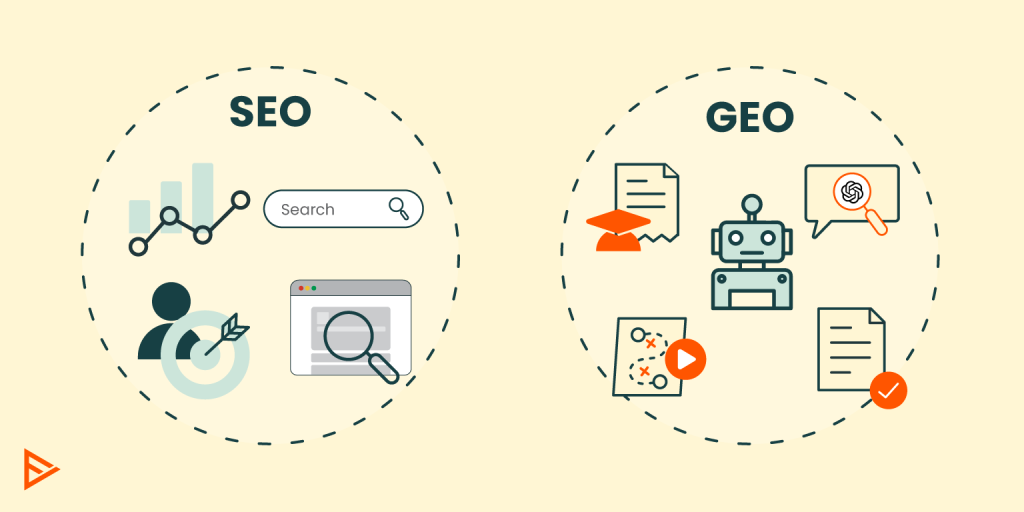
    SEO vs. GEO: What’s the Real Difference?

    While SEO focuses on getting a “click,” GEO focuses on getting a “mention.”

    FeatureTraditional SEOGenerative Engine Optimization (GEO)
    Primary GoalRank #1 on Google SearchBe the “Cited Source” in AI answers
    Key MetricClick-Through Rate (CTR)Brand Citations & Mentions
    Content StyleKeyword-dense articlesStructured, authoritative facts
    User IntentFinding a list of linksGetting a direct, synthesized answer

    7 Proven GEO Strategies for Entrepreneurs

    1. Kill the Fluff: Answer Questions with “Zero-Click” Precision

    AI engines are “answer machines.” They don’t want to read a life story; they want to solve a problem instantly. To rank in a Gemini or Perplexity response, your content must be the cleanest source of truth available.

    • The Strategy: Put the answer in the very first paragraph. Use the “Direct-Response Model.”
    • The Proof: AI engines prioritize content that is easy to summarize. If you can’t explain your product in one sentence, an AI won’t do it for you.

    2. Hierarchy Over Hype: Use Logical Architecture

    AI tools “crawl” your site to extract facts. If your blog is a wall of text, the AI will skip it for a competitor who uses Schema and Structured Headings. The Strategy: Use one H1, then H2s for main points, and H3s for details.

    • The Result: A clearer hierarchy leads to better “Rank Math” scores and easier extraction by AI bots.

    3. Build “Topical Clusters” to Prove Expertise

    AI favors websites that show niche authority rather than one-off posts. If you want to be the “expert” in AI’s eyes, you need to own the topic.

    • The Strategy: Link your blogs together. If you write about “GEO Tools,” link it to “GEO for Startups” and “GEO Case Studies.”
    • Internal Linking: This creates a “web” of information that proves to the AI you aren’t just guessing you are an expert.

    4. Inject “Trust Signals” (Data & Experience)

    AI filters out “generic fluff.” To be cited, your content needs E-E-A-T (Experience, Expertise, Authoritativeness, and Trustworthiness).

    • The Strategy: Include original data, author bios, and real-world case studies. The Fix: Replace “Many people say…” with “According to our 2025 internal audit…”

    5. Write for Natural Language (Entities, Not Keywords)

    People don’t talk to AI like they talk to Google. They ask questions: “How do I fix my SEO?”

    • The Strategy: Focus on “Entities” (your Brand Name + your Niche).
    • The Fix: Use conversational phrases. Instead of “SEO services Nairobi,” use “How our Nairobi-based agency helps entrepreneurs master SEO.”

    6. Provide Actionable Frameworks and Lists

    AI engines love Step-by-Step guides. They are the easiest content type for a bot to scrape and present as a “how-to” answer.

    • The Strategy: Use numbered lists for processes.
    • The Stat: Frameworks can boost AI citations by up to 67% because they provide immediate utility to the user.

    7. The “Freshness” Audit

    Information moves fast. AI engines like Perplexity prioritize recent data over old archives.

    • The Strategy: Refresh your top-performing blogs every 3–6 months.
    • The Fix: Update your statistics and add a “Last Updated” date to signal to the AI that your content is still relevant.

    The Bottom Line: Help First, Sell Later

    GEO is about becoming so useful that the AI has no choice but to mention you. Most of your competitors are still stuck in 2022. By implementing these seven steps today, you are future-proofing your business for 2026 and beyond.

    Which of these GEO tactics will you implement first? Let’s discuss in the comments below.

    Frequently Asked Questions About GEO

    • What is the main difference between SEO and GEO?

     Traditional SEO focuses on ranking in Google’s blue links. GEO (Generative Engine Optimization) focuses on getting your brand cited as an authority within AI responses from tools like ChatGPT and Perplexity.

    • Does traditional SEO still work?

     Absolutely. SEO is the foundation (site speed, mobile optimization), but GEO is the “authority layer” that ensures AI models trust your data enough to recommend it to users.

    • How do I start with GEO today?

     The fastest way is to add Schema Markup and ensure your blog answers a specific question in the very first paragraph.

    • Is GEO only for big brands?

     No. Small businesses and entrepreneurs can actually beat big brands in GEO by providing niche-specific, high-quality data that general websites overlook.

  • 7 Proven Ways Local SEO Helps Small Businesses Get More Customers.

    7 Proven Ways Local SEO Helps Small Businesses Get More Customers.

    Key Takeaways:

    • Visibility = Revenue: If they can’t find you on Maps, they can’t pay you.
    • High Intent: Local searchers are ready to buy now.
    • Trust Factor: 5-star reviews on Google work better than paid ads.
    • Mobile Dominance: Most Kenyans search for businesses on their phones while on the move.

    Many small businesses in Kenya offer amazing products. You might have the best cakes in Westlands or the most skilled mechanics in Industrial Area.

    But you have a problem: Visibility.

    People today do not drive around looking for signs. They pull out their phones and type “Cake shop near me” or “Mechanic around me.” If your business does not appear in those top 3 map results, you technically do not exist to them.

    This is where Local SEO for small businesses changes the game. It connects you to customers who are holding their wallets, ready to buy.

     What Is Local SEO? 

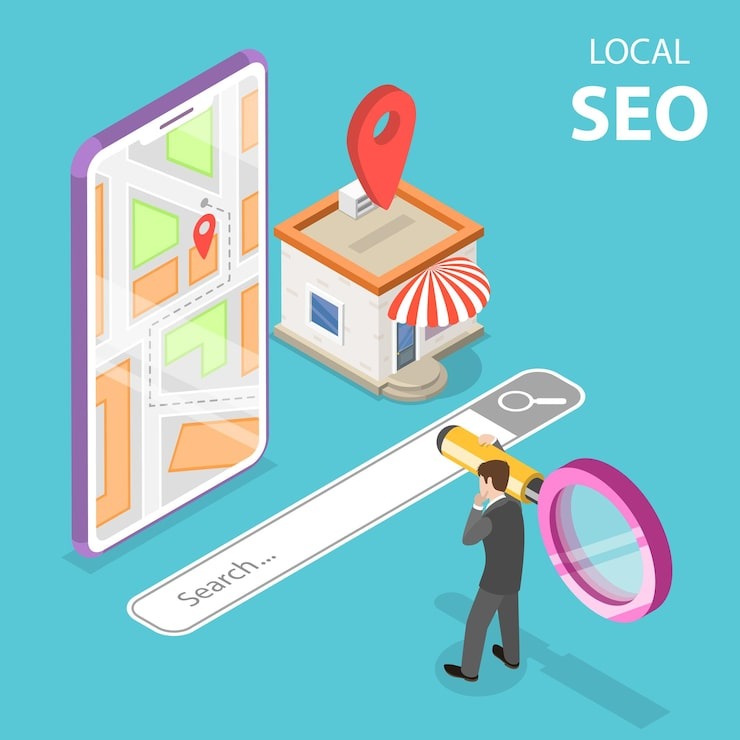
    Local SEO is the process of optimizing your online presence so you appear in search results for a specific physical location.

    Unlike general SEO (which tries to reach the whole world), Local SEO focuses on your neighborhood.

    • General Search: “Best coffee recipes” (Information)
    • Local Search: “Best coffee shop in Kilimani” (Action)

    How It Works:

    1. User Searches: “Plumber near me.”
    2. Google Checks: Uses GPS to find businesses close to the user.
    3. Result: Your business pops up with a “Call” or “Directions” button.
    4. Action: You get a customer.

     The 7 Proven Ways Local SEO Grows Your Business

    Why is this the most powerful tool for small businesses? Here are the 7 specific ways it drives revenue.

    1. It Captures “High-Intent” Customers. People searching locally aren’t just browsing; they are ready to act. Data shows that 76% of people who search for a local business on their phone visit a store within 24 hours.

    2. It Levels the Playing Field. You don’t need the budget of Safaricom or Jumia to win. Google Maps ranks based on relevance and distance, not just budget. A small local shop can easily outrank a giant corporation in the local results.

    3. It builds Instant Trust (Social Proof) When a customer sees your business with a 4.8-star rating and glowing reviews, they trust you immediately, even before they meet you.

    4. It Increases Foot Traffic For physical businesses (salons, clinics, restaurants). Local SEO acts like a digital signpost. It directs people from the search bar straight to your front door.

    5. It Boosts Mobile Visibility In Kenya mobile is king. Local SEO is specifically designed for mobile screens, giving users big buttons to “Call Now” or “Get Directions” without needing to visit your website first.

    6. It is Cost-Effective. Unlike paid ads (where you pay for every click), traffic from Google Maps is free. Once you rank, you get organic leads 24/7 without spending a shilling on ads.

    7. It Delivers Long-Term ROI A newspaper ad works for one day. A flyer works until it is thrown away. But a strong Local SEO ranking works for years, bringing in a steady stream of customers month after month.

    Key Elements: The “Big 3” of Ranking

    To succeed with Local SEO for small businesses, you need to focus on these three pillars.

    1. Google Business Profile (The Foundation) This is non-negotiable. You must claim and verify your profile. Ensure you have:

    • Accurate Business Name.
    • Correct Address (Pin location).
    • Real photos of your work/office.

    2. NAP Consistency NAP stands for Name, Address, Phone. Google gets confused if your Facebook page says “Nairobi Road” but your website says “Nairobi Rd.” Ensure your details are identical everywhere.

    3. Local Keywords Don’t just say “We sell shoes.” Say “We sell men’s leather shoes in Nairobi CBD.” Use location names in your website content and blog posts.

    Common Mistakes That Hide Your Business

    • Ignoring Reviews: Never leave a review unanswered. Even a simple “Thank you” tells Google you are active.
    • Fake Reviews: Never buy reviews. Google will catch you and ban your listing.
    • Wrong Categories: Don’t choose “Store” if you are a “Shoe Store.” Be specific.

    Your 5-Step “Get Started” Checklist

    You don’t need to be a tech expert to start today:

    1. ✅ Claim your Google Business Profile.
    2. ✅ Fill in every section (Description, Hours, Services).
    3. ✅ Upload at least 5 high-quality photos.
    4. ✅ Ask 3 loyal customers to leave a review today.
    5. ✅ Embed a Google Map on your website’s “Contact Us” page.

    Frequently Asked Questions (FAQ)

    How long does Local SEO take to work?

     It typically takes 3 to 6 months to see significant results, but claiming your profile can yield quick wins in weeks.

    Do I need a website for Local SEO? 

    While you can rank on Maps without one, having a website linked to your profile significantly boosts your ranking power.

    Why is my competitor ranking higher than me?

     They likely have more positive reviews, more photos, or a more complete profile with consistent NAP details across the web.

    Stop Being Invisible

    Local SEO is not just a marketing tactic; it is survival. If your business serves people in a specific area, you cannot afford to be invisible.

    By optimizing for Local SEO, you stop chasing customers and start letting them find you.

    Need help ranking #1 in your neighborhood? At Elon’s Design, we specialize in turning local businesses into local leaders.

    📍 Get Your Free Local SEO Audit Today

  • A Practical Guide to Strategic Planning for Sustainable Business Growth

    A Practical Guide to Strategic Planning for Sustainable Business Growth

    Picture this: you’re on a plane, the pilot hasn’t checked the flight path, fuel is questionable, and when you ask about the turbulence, they shrug and say, “Good luck.” Scary, right? That plane is your business. Yikes.

    That’s exactly why strategic planning is your seatbelt, co-pilot, and flight map rolled into one. Let’s break it down without putting you to sleep.


    Strategic Planning. What Is It Really?

    Simply put: it’s figuring out where your business stands, where it wants to go, and how it will get there without crash-landing.
    Think of it like using Google Maps in a city you’ve never visited; you need directions, or you’ll end up in a ditch.

    A proper strategic plan covers:

    • Strengths: what your business does like a boss
    • Weaknesses: the stuff that makes you cringe at team meetings
    • Threats: competitors, market shifts, and unexpected chaos

    Without it, you’re basically flying blind, hoping a miracle autopilot exists. Spoiler: it doesn’t.


    Why You Need a Strategic Planning Session 

    A strategic planning session is just a gathering of brains, ideas, and snacks to plot your company’s next move.

    Here’s what goes down:

    1. Leaders share visions of the future (dramatic hand waves optional).
    2. Everyone spills the truth about what’s working and what’s a dumpster fire.
    3. Goals get set that aren’t just “make it to Friday.”
    4. Market traps and competitor shenanigans get spotted early.
    5. Teams leave feeling like they actually matter.

    Bonus: if someone pitches a ridiculous idea, you’ll get a good laugh.


    Who Should Be in the Room

    Don’t invite the whole office. Here’s the VIP list:

    • Leaders & Department Heads: They know what’s important and have the final call.
    • Junior Staff: They notice the chaos leadership misses.
    • Facilitator: The one who can keep things moving without losing everyone to tangents.
    • Strategy & Market Analysts: Those who can say, “Uh-oh, your competitor just stole your spotlight.”

    The 9-Step Plan to Keep the Session Sane

    1. Be prepared: Send materials ahead so people aren’t just there for the free coffee.
    2. Review the agenda: Chaos is fun until no one knows what’s happening.
    3. Set ground rules: Respect time, encourage honesty, and no diva moves.
    4. Break the ice: Quick games or memes are great for getting people talking.
    5. Align on vision: Everyone should know the destination before plotting the route.
    6. SWOT it out: Strengths, Weaknesses, Opportunities, Threats. Keep it snappy.
    7. Check internal reality: Know what’s going on inside the org, wants and all.
    8. Spot external risks: Market trends, competitors, and random chaos. Keep your eyes open.
    9. Build the roadmap: Clear steps, realistic deadlines, and room for detours.

    TL;DR: Why This Actually Matters

    Strategic planning isn’t just a buzzword; it’s your business GPS. It gives you:

    • Goal alignment (no more “whose idea is it anyway?”)
    • Smarter decisions (less guessing, more winning)
    • Resilience to chaos (you’ll be ready when storms hit)
    • Engaged teams (everyone loves being heard)

    So next time when someone says, “Let’s run a strategy session,” don’t groan. Think of it like putting on your seatbelt for a smooth flight, because this time, you’re in control.


    💡 Want Free Strategic Planning Resources?


    Templates, guides, and pro tips from companies like Amazon and Google, grab them and make your next session productive (and yes, actually fun). 

    Read More blogs from us  →https://elondesigns.com/blog/digital-marketing-in-kenya

  • How Premium Design Builds Trust: The Psychology Behind High-Performing Websites

    How Premium Design Builds Trust: The Psychology Behind High-Performing Websites

    When someone lands on your website, their brain makes a decision almost instantly: “Do I trust this brand?”  That judgment is emotional before it’s logical. Even before reading a word, visitors are already forming opinions based on what they see: layout, color choices, spacing, and overall feel.

     A premium design works behind the scenes to build confidence quickly. It gives users comfort, safety, and a sense that your business is capable and professional. This silent trust is what turns clicks into conversations and visitors into customers.

     A Tidy Layout Creates Instant Comfort


    When a page is packed with loud colors, too many elements, or text everywhere, people feel mentally tired right away. A tidy layout keeps things simple and easy to follow. Sections are clearly separated, text is readable, and the design feels calm. That calm feeling tells visitors they can trust what they’re looking at, so they stay longer and explore.

    Think of it like walking into a well-arranged store versus a messy one. In the neat store, you instantly know where to go, what to check out first, and where to find someone for help. Online, the same rule applies: a tidy design makes users feel welcome, respected, and safe.

    Simple Language Builds Trust

    People don’t read every word on a website; what they do is quickly scan to see if the business understands what they need. When the message is clear and straight to the point, they relax and keep going, exploring the different sections that your website holds. The simpler the language, the more likely the traffic. Therefore, if one uses complicated words, people tend to assume that you are hiding something. Use words like: Here’s what we do. Here’s how we help you. No confusion, just straightforward.

    High-quality Visuals Show You Care About Quality

    We trust what looks polished. Sharp photography, clean icons, and well-chosen illustrations show effort and professionalism. They make your products and services feel valuable.

     It’s the same reason people choose products with better packaging: presentation influences perception. If you cut corners visually, people assume you cut corners everywhere. Thus, for the photos, one needs to resize and convert them for easier loading. Failure to that it will result in slow loading of the website, and if it takes more than five seconds for the visitor to bounce.

    Consistent Branding Shows Stability

    Think about a store you like. Every time you visit, it looks and feels the same: same colors, same vibe, same type of service. That familiarity makes you comfortable. Websites work the same way.

    When your colors, fonts, and style remain the same across every page, the experience feels intentional. This tells visitors your brand has its act together. Inconsistency creates tiny doubts, and the biggest mistake one can make in a website is to create doubts and instability for the purchaser.

    But if one page looks playful, the next looks serious, and another has a completely different font, something feels off. Visitors may not say it out loud, but their brain picks up the inconsistency and start doubting things

    Fast Loading Shows Respect for Your Audience

    Speed means efficiency. If your site loads fast, users naturally think you are organized and competent. A slow site feels like it’s been neglected, which makes people start wondering: “If they neglect their website, will they neglect me too?” With every second of delay, a negative story is told, and users leave their website. Will they neglect me, too?” With every second of delay, a negative story is told, and users leave.

    Easy Navigation Keeps People Moving Forward

    Think of your website like a supermarket. If the aisles are labeled clearly, you quickly find what you came for, and you might even pick a few extra things on the way out. Likewise, if everything is mixed up and signs are missing, you get annoyed and leave.

    It’s the same online. When visitors land on a site, they want to find the important stuff fast:

    • What do you sell?

    • How much does it cost?

    • How do they contact you?

    • Why should they trust you?

    Clear menus, visible buttons, and simple navigation routes help people move from curiosity to action.

     Social Proof helps People Feel Safe Choosing You

    People always want to know they’re making the right choice. When someone sees reviews, ratings, or real customer stories, it shows them that others have already tried your product or service and were happy with it. 

    That removes doubt. It makes the decision feel less risky. Things like client logos, photos of real customers, before-and-after results, and screenshots of positive feedback all help visitors think, ”If it worked for them, why not me?”

     In general, positive feedback, good user experience, and reviews generate an impact on the client. With me here, I have listed the recommendations for other entrepreneurs who want to have a premium website.

    Good design is more than how nice a website looks. It’s how it makes people feel. When someone lands on your site and everything is clear, organized, and trustworthy, they feel confident that your brand is professional and capable. That confidence is what encourages them to learn more, ask questions, and eventually make a purchase.

    A website that builds trust becomes a salesperson that works for you 24/7. It reassures customers before you even speak to them. If you want more people to choose your business, start with a design that helps them believe in you from the first second. Strong design doesn’t just attract attention, it earns loyalty, and that’s what truly grows a business.

    Ready to give your business a premium website? Elon Designs offers clean, modern, SEO ready websites that appeal to visitors and keep them engaged. If you want a site that looks professional, loads fast, and ranks better, we will guide you step by step. 

    Email: [email protected] 

    Call / WhatsApp: +254 724 636 436 

    Let’s give your business a high-ranking, high-performance sales asset.

  • 7 Social Media Marketing Strategies: The Proven System Behind Successful Brands That Grow, Engage, and Convert. Social Media Marketing

    7 Social Media Marketing Strategies: The Proven System Behind Successful Brands That Grow, Engage, and Convert. Social Media Marketing

    Social Media Marketing Strategy isn’t just about posting pretty pictures anymore. It’s about building a system that turns attention into trust, and trust into real customers.

    In 2026, building a dominant online presence requires strategic positioning. The brands winning today aren’t lucky; they are highly intentional about their digital marketing strategy. If you’ve been posting consistently but not seeing real growth or sales, this guide will walk you through what successful social media brands actually do differently.

    1. Build a High-Authority Social Media Marketing Strategy.

    branding advertisment copyright value profile concept

    Before a single post goes live, successful brands define their digital brand identity. In a world of AI-generated noise, authenticity is your greatest competitive advantage. You need to know exactly who you are speaking to and what unique problem you solve. 

    To build a recognizable brand, define your:

    • Ideal Customer Persona: Who is your high-intent buyer?
    • Unique Value Proposition (UVP): Why should they choose you over a competitor?
    • Brand Voice: Is your tone professional, bold, friendly, or “chill”?

    This clarity shapes everything, from your captions to your colors, content style, and even how you reply to comments and DMs. When people land on your page, they should “get” your brand in five seconds.

    Read our full guide on https://www.elondesigns.com/blog/the-single-channel-trap-why-your-viral-tiktok-is-failing-to-sell-in-2026

    2. They Create Content With a Purpose

    Successful brands don’t post randomly. Every piece of content falls into one of three categories:

    • Educational: Teaches something useful
    • Engaging: Starts conversations or tells stories
    • Promotional: Sells a product or service

    A healthy mix keeps your audience interested without feeling like they’re being sold to all the time.

    Instead of just saying “We offer social media management,” show:

    • A before-and-after page growth story
    • A quick tip on improving engagement
    • A behind-the-scenes look at how you plan content

    According to HubSpot’s 2025 State of Marketing Report, marketers increasingly rely on consistent content and strategic channels to strengthen brand visibility and trust while guiding audiences toward conversion.

    🔗 https://www.hubspot.com/state-of-marketing

    That’s how trust is built.

    3. They Focus on Consistency, Not Virality

    Going viral is nice. Being consistent is powerful.

    Top brands post on a schedule their audience can rely on. Whether it’s three times a week or daily, what matters most is showing up regularly with quality content.

    Consistency trains both people and algorithms to take your page seriously. Over time, this leads to better reach, stronger engagement, and more profile visits.

    4. They Engage Like Real Humans

    Social media is a two-way street. Brands that grow fast don’t just post, they talk back.

    They:

    • Reply to comments
    • Respond to DMs
    • Engage with other pages in their niche

    This tells platforms that your account is active and valuable. It also makes your audience feel seen, which turns followers into loyal fans and customers.

    5. They Use Data to Improve Their Strategy

    Every successful brand tracks what works and what doesn’t.

    Look at:

    • Which posts get the most saves or shares?
    • What time is your audience most active?
    • What content drives profile visits or website clicks?

    Then do more of what performs well. Growth isn’t about guessing; it’s about adjusting based on real results.

    6. They Turn Attention Into Action

    Engagement is great, but conversions are the goal.

    Strong brands guide their audience clearly:

    • “Book a free consultation.”
    • “Visit our website.”
    • “Send us a DM to get started.”

    Your bio, captions, and pinned posts should always show people what to do next. Don’t make them guess.

    7. They Integrate Social Media With Their Digital Presence

    The best social media strategies don’t live alone. They connect with:

    • A professional website
    • SEO-optimized blog content
    • Business email and newsletters
    • Strong digital branding

    This creates a full digital system where social media brings traffic, and your website and email convert that traffic into long-term clients.

    Conclusion

    A powerful social media marketing strategy is the difference between a brand that looks busy online and a brand that consistently attracts real customers and long-term growth. The strategy behind successful social media brands isn’t complicated, but it is intentional. Clear branding, consistent content, real engagement, and smart conversion paths make the difference between a page that looks busy and a brand that actually grows. If you treat social media like a business tool instead of just a posting platform, you’ll start seeing results that go beyond likes and follows into real impact and real income.

    At Elon’s Design, we don’t just “make things look pretty.” We function as Integrators. We understand that design and marketing must work together.

    Ready to get started? Contact us today to discuss a custom digital marketing strategy that fits your goals.

    Email: [email protected]

    Call / WhatsApp: +254 724 636 436
    Prefer a quick chat? Book a 15-minute consultation, and we’ll recommend the top 3 actions you can take this month to lift conversions.