Author: Elon

  • The Single Channel Trap: Why Your Viral TikTok is Failing to Sell In 2026

    The Single Channel Trap: Why Your Viral TikTok is Failing to Sell In 2026

    Viral Fame Isn’t a Business Model !!  


    In 2026, it is easier than ever to get attention. A single well-timed video on TikTok or Instagram Reels can get you 50,000 views overnight. This gives you a dopamine hit and a false sense of success.

    However, the uncomfortable truth is that views do not pay the bills. Likes are not leads. Many Kenyan entrepreneurs are falling into the Single Channel Trap by obsessing over one platform while neglecting the rest of the ecosystem.

    To scale a business today, you must move beyond the scroll and embrace a holistic digital marketing strategy. If your business relies entirely on an algorithm you don’t control, you are building on rented land.

    The Big 3 Framework: Discovery, Authority, and Sales

    A successful holistic digital marketing plan is not about being everywhere at once. It is about connecting the right channels to create a seamless journey for your customer.

    • Discovery (Social Media) This is the top of your funnel, where people find you via social search. Use TikTok or Reels to capture attention, but do not stop there.
    • Authority (Web Design and SEO) When a user searches for your brand, your website must prove your expertise. High-performance web design and SEO ensure you are the safe answer to their problems.
    • Sales (Email and SMS) This is the channel you truly own. Moving followers into a private database protects your revenue from the next algorithm change.

    The Danger of Silos: a) What You Are Forsaking

    When you only dwell on one form of marketing, you create a silo. Your efforts are disconnected, and your potential clients drop off before they ever reach your checkout page

    Single Channel vs. Holistic Strategy

    FeatureThe Single Channel TrapThe Holistic Approach
    Primary FocusChasing viral views and likesBuilding a sustainable sales engine
    Platform Ownership100% reliant on rented platformsBalances rented and owned channels
    Customer JourneyDisjointed and confusingSeamless flow from social to sale
    Long Term ValueLow; if the algorithm shifts, you loseHigh, you build assets you own

                                     B) Why Your Marketing is Currently Leaking Revenue   

    When you “dwell” on one form of marketing, you create a silo. In a silo, your data is trapped, and your customer journey is broken. A customer sees your video (Discovery), but when they click your link, the website is slow or confusing (Authority). They leave, and you have no way to follow up (Sales).

    The Trap vs. The Engine

    MetricThe Single Channel TrapThe Holistic Growth Engine
    User PathTikTok -> Dead End.TikTok -> Web Audit -> Email Nurture.
    Risk FactorHigh (Algorithm dependent).Low (Multi-channel stability).
    Cost Per LeadIncreasing as ads get crowded.Decreasing as organic SEO compounds.
    Trust FactorSuperficial (Based on one video).Deep (Based on consistent authority).

    Frequently Asked Questions

    What exactly is the Single Channel Trap?

    The Single Channel Trap is a common strategic error where a business relies on one platform, such as TikTok or Instagram, to handle its entire marketing lifecycle. While these platforms are excellent for discovery, they are “rented land.” If the algorithm changes or your account is restricted, your entire revenue stream disappears. A holistic digital marketing approach prevents this by distributing your presence across channels you own and control.

    Why is holistic digital marketing better than social media marketing?

    Social media marketing is a subset of a broader digital strategy. It focuses exclusively on engagement and community on social platforms. Holistic digital marketing encompasses your website, SEO, email lists, and offline touchpoints. By integrating these, you create a system where social media drives traffic, your website builds authority, and your email list closes the sale. This integrated approach has been shown to increase conversion rates by up to 250% compared to siloed social media efforts.

    How does AI change SEO and marketing in 2026?

    In 2026, we no longer just optimize for Google; we optimize for AI “Answer Engines.” This is called Generative Engine Optimization (GEO). AI agents like ChatGPT and Perplexity look for structured, authoritative data to provide answers to users. If your website is not optimized with clear headings and expert-led content, AI tools will not recommend your brand. A holistic strategy ensures your content is machine-readable and human-centric.

    What are the Big 3 channels I should focus on first?

    For most Kenyan businesses looking to scale, the priority should be:

    1. Your Website: Your 24/7 salesperson and the home of your brand.
    2. Social Discovery: High-reach platforms like TikTok or LinkedIn to find new audiences.
    3. Email/SMS Marketing: Your direct line of communication to your most loyal customers.

    Is web design really a part of my marketing strategy?

    Yes. In 2026, web design is the foundation of your Authority. You can have the best marketing in the world, but if your website is slow or confusing, your conversion rate will suffer. Good design isn’t just about looking pretty; it is about “User Experience” (UX). If a user cannot find what they need within 3 seconds, they will leave and find a competitor with a better digital experience.

    How do I measure the success of a holistic strategy?

    Instead of just looking at “likes” or “followers,” a holistic strategy looks at Customer Lifetime Value (CLV) and Conversion Rate. We track how many people move from a social post to the website, and finally to an email signup. By measuring the entire “journey” rather than just one-off posts, you get a true picture of your Return on Investment (ROI).


    Build Your Empire on Owned Land

    The era of relying on a single “viral hack” is over. As an Integrator or a business leader, your job is to build systems that work regardless of which social media platform is currently popular.

    Holistic digital marketing is the only way to ensure that your 10k monthly income transitions into a 100k+ monthly profit. Stop chasing the algorithm and start building an asset that you own.

    Is your business currently stuck in a silo? At Elon Designs, we help you connect the dots between your social media, your website, and your sales.

    Contact us today: 0724636436 for a 2026 Digital Strategy Audit, and let’s turn your views into a predictable revenue engine.

    Email: [email protected]
  • SEO Isn’t Dead, It’s Just Smarter: How Modern Brands Win Search in 2025

    SEO Isn’t Dead, It’s Just Smarter: How Modern Brands Win Search in 2025

    Let’s be honest here, for years I’ve heard people say that SEO is dead, usually after a major Google update or when a new platform starts getting attention. But the truth is, it has evolved, and the winning brands in 2025 are the ones that have evolved with it. The deal is that it became more human, more intelligent, and a lot more strategic. Search is not about cramming keywords into a blog anymore. It’s about showing up where people are searching, whether that’s on Google, TikTok, or inside an AI chat box, and giving them the most relevant, honest answer in the most engaging format. 

    Let’s break down how smart brands are adapting:

    1. Search Is Everywhere, Not Just Google.

    In 2015, Google accounted for about 90% of global search traffic. Today, people search across dozens of platforms. According to a 2025 DataReportal study, over 51% of Gen Z users now use TikTok or Instagram as their first stop for information. Pinterest has become a visual search engine, Amazon dominates product discovery, and even ChatGPT, Gemini, and Perplexity are now search gateways powered by AI summaries. That means SEO isn’t just “Search Engine Optimization,” it’s Search Everywhere Optimization. Modern brands repurpose their message across platforms:

    • Optimized images for Pinterest
    • FAQs and structured data for Google
    • Conversational answers for AI tools

    2. Human Signals Now Matter More Than Algorithms

    Google’s Search Generative Experience (SGE) and AI-based ranking systems are obsessed with useful experiences, not mechanical optimization. The algorithm now measures how people interact with your content: do they stay, scroll, click deeper, or bounce?

    Here’s what matters most in 2025:

    • Intent clarity: Your content should answer what people are really asking, not what you think they’re asking.
    • Natural tone: Write the way your customers talk. Skip the jargon. Focus on clarity and empathy.
    • Engagement depth: Use mixed-media visuals, infographics, polls, or short videos to maintain close attention.

    3. Topical Depth Beats Keyword Density

    Old-school SEO used to be about stuffing dozens of keywords into a 1,000-word post. That’s ancient history.

    In 2025, the winners build topic clusters of interlinked articles that explore a theme in depth. For example, a digital agency might create a “Small Business SEO” hub, then link it to posts like:

    • “How Local SEO Works in Nairobi”
    • “Best Free SEO Tools for Startups”
    • “Google My Business Optimization Tips”

    This approach signals authority to Google, and it helps readers navigate your site like a series of lessons, not random posts. The result? More time on site, stronger trust, and better rankings over time.

    4. AI + SEO = Personalization

    With AI, search has been reshaped faster than ever. When users type into Google or an AI assistant, results are reflected by their search history, location, and preferences. That means two people can search the same phrase, but see totally different results. Smart brands are responding with dynamic, data-informed content:

    • Personalized landing pages
    • AI-generated product recommendations
    • Chatbots that guide users to what they need instantly

    The best SEO strategy today is one that feels tailored, not templated. People don’t just want to find you; they want to feel like you understand them.

    5. Branding Is the New Backlink

    In the past, backlinks were referred to as the holy grail, a prized asset. Now, your brand acts as your strongest SEO signal. That’s why modern SEO and branding are inseparable.

     In general, the more your brand gets mentioned, shared, and searched for by name, the stronger your organic presence becomes. If your audience trusts you, algorithms will too.

    So, Is SEO Really Dead?

    Not at all. It’s just matured. 

    The current SEO is about connection, credibility, and context. It’s about creating genuine experiences that make people stop, stay, and share.

    Far from it. The game has simply evolved. The optimization is no longer for a machine’s algorithm, but for a human’s intuition. Google does not just understand the winning brands; their people understand them.  

  • How AI is Transforming SEO in 2026: What Every Business Needs to Know

    How AI is Transforming SEO in 2026: What Every Business Needs to Know

    In 2026, artificial intelligence (AI) is no longer a futuristic concept; it has now become a key player in the world of digital marketing. For businesses aiming to stay ahead online, understanding how AI can affect SEO is critical. From content creation to keyword strategy and user experience, AI is reshaping the rules of the game.

    1. AI-Powered Content Creation: Smarter, Faster, Better

    One of the biggest changes AI has brought to SEO is content creation. AI tools can help marketers and writers identify trending topics, suggest high-performing keywords, and even generate full articles. But here’s the catch: AI works best as a co-creator and not a replacement. The content still needs a human touch; authenticity and storytelling are what make readers engage and share.

    For example, AI can suggest headings optimized for SEO, provide meta descriptions, or even recommend internal links, but it’s up to the human writer to make the article relatable, persuasive, and authoritative. Websites that combine AI efficiency with human creativity are the ones that get noticed by both users and search engines.

    2. Smarter Keyword Research with AI

    Keyword research used to be a time-consuming task, digging through spreadsheets, analyzing search volume, and guessing at user intent. AI has changed that. Today, AI can scan massive datasets in seconds, identifying not just popular keywords, but contextual and long-tail keywords that match user intent.

    This means businesses can target phrases that are more likely to convert, rather than just attract traffic. For example, instead of targeting a generic term like “digital marketing,” AI might suggest “digital marketing strategies for small businesses in 2026,” a more precise phrase with higher conversion potential.

    3. Personalization and User Experience

    Search engines prioritize sites that deliver excellent user experiences. AI can help optimize websites by analyzing visitor behavior, recommending content personalization, and suggesting UX improvements. Features like AI-driven chatbots, personalized content feeds, and dynamic landing pages can make users feel seen and understood, which in turn improves dwell time and lowers bounce rates.

    Imagine a visitor landing on your website and immediately seeing content that matches their interests or needs. That’s AI in action, creating a seamless experience that both users and search engines love.

    4. Predictive SEO Insights: Staying Ahead of Trends

    One of AI’s most powerful capabilities is predictive analysis. AI can forecast which topics will become popular, which keywords will trend, and what content formats users will prefer. This allows businesses to plan content, capturing traffic before competitors even notice.

    For example, an AI tool could highlight an emerging trend in sustainable fashion, giving a retailer the chance to create content around that trend before the market is saturated. Early movers in SEO often enjoy significant visibility and authority, which translates to higher rankings and more organic traffic.

    5. Automation Meets Strategy

    AI also automates repetitive SEO tasks like meta tag creation, sitemap updates, and performance monitoring. This frees up marketers to focus on strategy, creativity, and audience engagement. The combination of automation and strategic human input creates a workflow that is both efficient and effective, allowing businesses to scale their SEO efforts without sacrificing quality.

    6. Ethical Considerations and Balance

    While AI brings incredible efficiency, it’s important to use it responsibly. Over-reliance on AI-generated content without human oversight can result in generic, low-quality content that users and search engines can detect. The best results come from a balanced approach: let AI handle research, analysis, and repetitive tasks, but leave the content creation, storytelling, and strategy to human experts.

    Final Thoughts

    AI is transforming SEO, but it’s not replacing human expertise, it’s enhancing it. Businesses that utilize AI tools while maintaining a human touch will produce content that ranks higher, resonates with audiences, and drives real results.

    In short, the future of SEO is a collaboration between humans and AI. Those who embrace it now will not only improve their search rankings but also build stronger, more engaging connections with their audience.

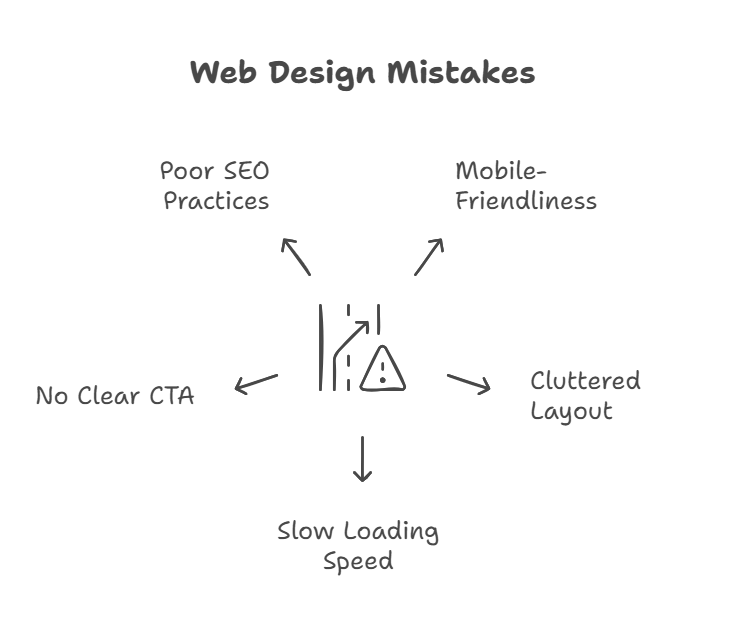
  • Top 5 Web Design Mistakes That Are Stopping Your Website From Selling

    Top 5 Web Design Mistakes That Are Stopping Your Website From Selling

    Are you frustrated that your website isn’t bringing in sales, no matter how much traffic you get?

    You are not alone. Millions of business owners invest in flashy websites that look good but suffer from critical web design mistakes that fail to convert visitors into paying customers.

    Have you ever wondered why some websites resonate with users while others prompt them to leave in seconds?

    Here’s the surprising truth: it’s not your product or service, it’s your web design. A poorly designed site can silently drive away customers before they even scroll past your homepage. Think of it like throwing a party, and no one feels welcome: fancy decorations, great music, but the doors are locked, and the vibe feels off.

    More than 75% of people judge a company’s credibility based on its website design alone. If your site isn’t optimized for conversions, you’re losing money every hour.

    Let’s dive into the top 5 web design mistakes killing your sales and how to fix them.

    1. Slow Loading Pages That Drive Visitors Away

    Did you know that 53% of mobile users leave a site that takes more than 3 seconds to load? A slow website isn’t just annoying, it’s costing you leads and sales. Think of it like waiting in a long queue while a competitor hands out free coffee next door.

    The faster the website speed, the easier it is for the visitor. Therefore, website speed optimization is necessary for the visitor, the development team, and the website owner. Compress your images, use a Content Delivery Network (CDN), and ensure you are using high-quality hosting. At Elon Designs, we provide specialized hosting in Kenya that ensures your site loads in the blink of an eye.

    2. Confusing Navigation That Frustrates Users

    One of the biggest web design mistakes is making your customers work too hard. Visitors don’t have time to hunt for information. If they can’t find what they want in seconds, they’ll leave. Clear menus, logical flow, and intuitive layout aren’t optional; they’re essential.

    Imagine entering a store where products are scattered randomly; would you shop there? 

    Your website is no different. One of the biggest reasons visitors leave a website is poor navigation. By focusing on website navigation tips, you can guide users smoothly through your site, making it easy for them to find what they need without frustration. 

    Coupled with strong user experience design, your website becomes intuitive, enjoyable, and keeps people engaged longer. Following proven UX best practices like clear menus, logical page flow, and clickable elements that stand out ensures that every visitor can navigate your site effortlessly, ultimately boosting conversions and keeping customers coming back.

    3. Lack of Clear Call-to-Actions (CTAs)

    Your site might be beautiful, but if visitors don’t know what to do next, your sales funnel dies. 

    Buttons like “Buy Now”, “Book a Free Consultation”, or “Get Started Today” guide users toward action.

    A single optimized CTA can increase conversions by up to 200%.

    A website without clear calls to action is like a store without signs pointing to the checkout. Focusing on CTA optimization ensures your buttons and links guide visitors toward taking meaningful actions.

     By applying proven call-to-action tips, you can make your prompts more persuasive and noticeable. This directly impacts web design conversion, turning casual visitors into paying customers and making your website a powerful sales tool.

    4. Not Mobile-Friendly in a Mobile-First World: If it’s not mobile-friendly, you’re losing visitors.

    Over 60% of website traffic comes from mobile devices, yet many sites are still desktop-centric.In short, it works fine on a desktop but struggles on a mobile, hence it’s not a mobile-friendly website. A design that works only on a laptop is effectively invisible to most potential customers.

    Picture a user pinching and zooming, frustrated, ready to leave, and landing on a competitor’s smooth mobile site instead.

    image

    5. Overloading Pages with Clutter and Pop-Ups

    Too many colors, text, images, and pop-ups overwhelm visitors. A clean, focused layout directs attention to your offer, not distractions.

    Users form an opinion about your website in just 50 milliseconds. One cluttered page could destroy first impressions before a single word is read.

     Minimal web design is the secret to high conversions. A clean website layout directs the eye exactly where you want it to go: your product.

    1. Focus: One goal per page.

    2. Declutter your website: Remove unnecessary sidebars.

    3. White Space: Give your content room to breathe.

    A website isn’t just a digital brochure; it’s your 24/7 salesperson. Avoiding these design mistakes is like giving it a megaphone instead of whispering in the dark. Fixing them can turn traffic into paying customers overnight.

    Call-to-action: Check your website today. Is it welcoming visitors or quietly pushing them away? Fixing just one of these mistakes could dramatically improve your sales, and that’s just the start.

    Frequently Asked Questions (FAQ for SEO)

    How do web design mistakes affect SEO?

    Search engines like Google track “Bounce Rate.” If users leave your site quickly because of poor design, Google assumes your site isn’t helpful and drops your ranking.

    What is the most important element of web design?

    While aesthetics matter, User Experience (UX) and Page Speed are the most critical factors for converting visitors into customers.

    How can I check my website speed?

    You can use free tools like Google PageSpeed Insights or GTmetrix to see how fast your site loads in Kenya and globally.

    A Strong Website Starts With the Right Foundation

    At Elon Designs, we specialize in providing the best hosting for businesses in Kenya and beyond. We handle the technical heavy lifting so you can focus on running your company.

    Ready to stop losing customers? Click here: cloudelona.com to View Our Secure Hosting Packages or Contact Our Team for a Free Consultation.

    Email: [email protected]
    Call /WhatsApp: +254 724 636 436

  • How Web Hosting Affects Sales: 3 Critical Ways It Kills Revenue

    How Web Hosting Affects Sales: 3 Critical Ways It Kills Revenue

    To understand exactly how web hosting affects sales, imagine hiring the best salesperson in the world. They are charming, knowledgeable, and persuasive. But every time a customer walks up to ask a question, this salesperson freezes and stays silent for 10 seconds.

    The customer doesn’t wait. They walk away.

    Your web hosting is that salesperson.

    Many business owners spend thousands on marketing, yet they ignore the website infrastructure that powers it all. They don’t realise the impact until they see their conversion rates flatline.

    Data from Google Developers shows that as page load time goes from 1 second to 3 seconds, the probability of a user leaving increases by 32%.

    In this guide, we will break down the 3 critical ways your server impacts your bank account and help you diagnose if your host is costing you money.


    1. How Web Hosting Affects Sales Through Speed

    In the eyes of search engines like Google, speed is a ranking factor known as Core Web Vitals. Specifically, they measure TTFB (Time to First Byte), which is how long it takes your server to “wake up” when a customer clicks a link.

    Over half of global web traffic comes from smartphones, which often rely on unstable data connections rather than fast Wi-Fi. It is crucial to consider these mobile users. If you want to see a real-world example of how web hosting affects sales, look at your mobile bounce rates. If your hosting server is not optimised for rapid content delivery, mobile shoppers are unlikely to wait for a slow page to load; they will quickly move on to the next result in their search.

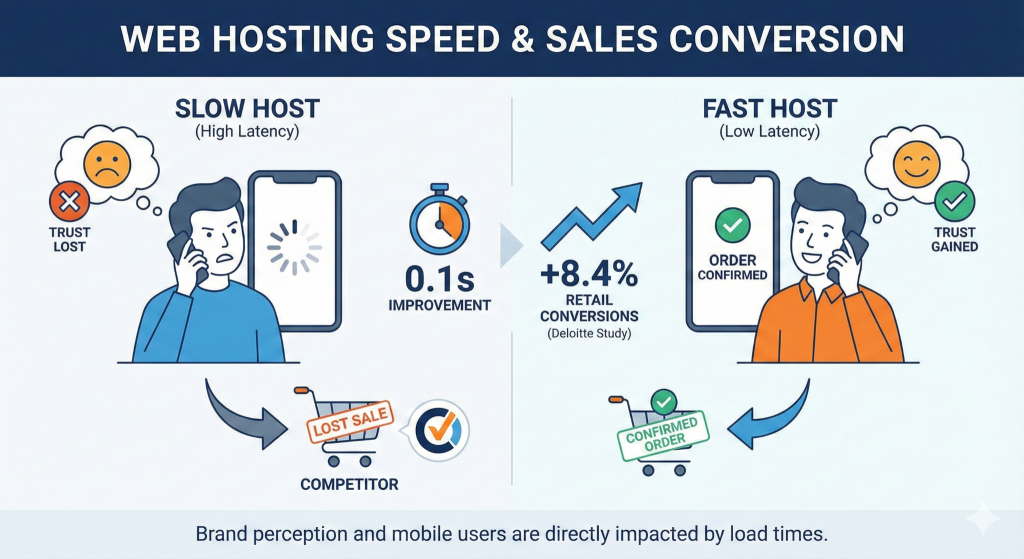
    Site speed significantly influences not only technical rankings, page speed but also brand perception. According to a Deloitte study, a mere 0.1-second improvement in load times can boost retail conversions by 8.4%. An instantly loading website projects competence and reliability to a customer, whereas a slow or lagging site can subtly suggest that the business is disorganised or outdated.

    • The Conversion Drop: Research has shown that a mere 0.1-second delay in page load can cause a 1% drop in sales.
    • The Danger Zone: If your hosting server is slow, customers assume your checkout process will be slow (and risky) too. They abandon their carts.
    image
    WEB HOSTING SPEED & SALE CONVERSION

    Bottom line: If your host is slow, your marketing ROI is being wasted on visitors who leave before your site even loads.

    The “Mobile-First” Reality Check

    It is impossible to talk about how web hosting affects sales without discussing mobile users. In Kenya and across Africa, over 70% of web traffic is mobile.

    Mobile phones have less processing power than desktop computers, and they often rely on unstable 4G data networks. This makes your hosting performance twice as important.

    • The “Heavy” Site Problem: If your hosting server is slow to respond (high latency), a mobile phone will struggle to render your site. The user sees a white screen for 5 seconds.
    • The Result: They hit the “Back” button. Google tracks this “Pogo-sticking” behaviour (users clicking your link and immediately bouncing back) and will penalise your SEO rankings for it.

    Pro Tip: High-quality hosting often comes with a built-in Content Delivery Network (CDN). A CDN stores copies of your website on servers all over the world. If a customer visits your site from Mombasa, the CDN serves the site from a server nearby, rather than one in Europe or the US. This single feature can cut your mobile load times in half.

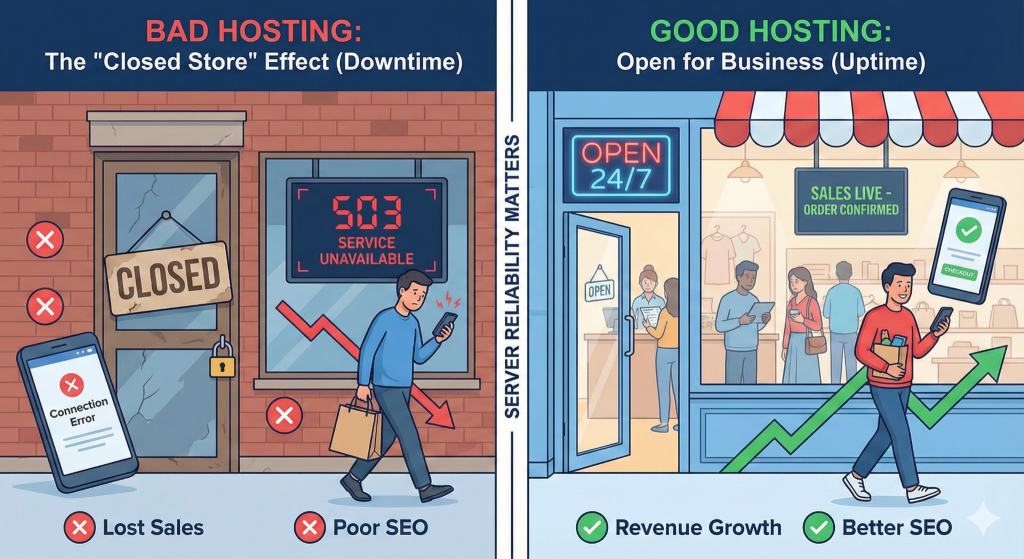
    2. Downtime: The “Closed Store” Effect

    Nothing illustrates how web hosting affects sales more clearly than downtime.

    If you are on a cheap shared hosting plan, your site might go offline during traffic spikes, exactly when you have the most potential customers trying to buy.

    • The Trust Factor: If a new client visits your site and sees a “503 Service Unavailable” error, they don’t come back later. They go to your competitor.
    • The “Noisy Neighbour” Risk: On shared hosting, you share resources with hundreds of other sites. If one of them gets a virus, your site crashes. Your sales stop instantly.

    Frequent downtime extends its negative impact beyond immediate revenue loss to cause lasting harm to your SEO rankings. When Google’s crawling bots repeatedly find your website offline, they flag it as unreliable or potentially abandoned. Many business owners fail to realise how web hosting affects sales through organic search rankings until they have already lost their position on Page 1. This repeated occurrence will cause Google to de-prioritise your pages, resulting in a dramatic drop in search rankings and the loss of hard-won organic traffic.

    Poor web hosting carries a significant reputational risk that is amplified by social media. Should your site fail during critical events like a product launch or a Black Friday sale, unhappy customers will not simply leave; they will publicly share their complaints on platforms like Twitter, Facebook, and various review sites. This negative “social proof” can deter potential customers for months, illustrating that the actual cost of choosing inexpensive hosting far exceeds the minor monthly savings.


    image
    24/7 SHOP

    3. Security Warnings: The Ultimate Trust Killer

    Modern shoppers are savvy. They look for the padlock icon (SSL) in their browser bar.

    Low-quality hosts often fail to auto-renew SSL certificates. If a customer sees a “Not Secure” warning from Chrome, they will not enter their credit card information. This is a subtle but deadly way in which web hosting affects sales by destroying trust right before the purchase happens. In this scenario, your hosting provider isn’t just failing you technically; they are actively blocking your sales.

    4. The “Hidden” Costs of Cheap Hosting

    When business owners ask how web hosting affects sales, they often look at the monthly price tag first. They see a plan for 300 KES/month and think they are saving money.

    This is a dangerous illusion. Cheap hosting usually comes with hidden costs that drain your budget later:

    1. No Automatic Backups: If your site gets hacked or an update breaks your design, cheap hosts often charge you a massive fee to restore it or tell you it’s gone forever.
    2. Paid Migrations: When you inevitably outgrow the slow server, they may charge you to move your files.
    3. Zero Developer Support: If you have a technical error, cheap support teams will send you a link to a generic article. You end up having to hire an expensive developer to fix a problem that a premium host would have fixed for free.

    The Math is Simple: If you save 500 KES a month on hosting but lose one customer worth 5,000 KES due to downtime, you haven’t saved money. You have lost profit.

    Comparison Table: Is Your Host Helping or Hurting?

    Use this table to quickly check if your current provider is optimised for sales growth.

    FeatureThe “Sales Killer” HostThe High-Value Host
    Uptime98% (Down frequently)99.9% Guaranteed
    Speed ImpactSlow server response (>600ms)Optimised caching (<200ms)
    SecurityPaid SSL / No backupsFree SSL / Daily backups
    ScalabilityCrashes during sales/promosScales resources instantly

    How to Fix It: A 3-Step Diagnostic Checklist

    Now that you understand how web hosting affects sales, here is how to audit your site in 5 minutes:

    • Run a Waterfall Test: Go to Gtmetricx. If the “Server Wait Time” is the longest bar, your host is the bottleneck.
    • Monitor Uptime: Use a free tool like UptimeRobot. If your site dips below 99.9%, it is time to move.
    • Check Support Speed: Open a chat with your host. If they take 30 minutes to reply, they won’t be there to help you when your site crashes during a sale.

    Read our guide on How to Choose the Best Web Hosting Services for Your Business to avoid these risks.

    Stop Losing Sales to Poor Hosting

    You shouldn’t have to worry about your website crashing during a sale or losing customers to slow loading times. Your hosting should be an asset, not a liability.

    At Elon’s Design, we understand exactly how web hosting affects sales, which is why we provide high-performance hosting optimised for stability. We offer the best web hosting in Nairobi, web hosting in Kenya, handling the migration, security, and speed optimisation so you can focus on running your business.

    🚀 Ready to speed up your site? View Our Premium Hosting Packages Here

    Case Study: The Cost of a 1-Second Delay

    Let’s look at a hypothetical scenario to visualise exactly how web hosting affects sales in a real business.

    Imagine an online shoe store in Nairobi:

    • Monthly Visitors: 10,000
    • Average Order Value: 3,000 KES
    • Conversion Rate: 2%
    • Monthly Revenue: 600,000 KES

    Now, imagine their hosting creates a 1-second delay. According to industry data, this drops conversions by 7%.

    • New Conversion Rate: 1.86%
    • New Revenue: 558,000 KES
    • Loss: 42,000 KES per month.

    That is 504,000 KES lost per year, all because the business owner wanted to save a few coins on a cheap shared hosting plan. Do not let this happen to you.

    Frequently Asked Questions (FAQ)

    Does hosting affect SEO? Yes. Google uses page load speed as a ranking factor. Slow hosting leads to lower rankings, meaning fewer customers find your store.

    What is the best type of hosting for high sales? For a high-traffic e-commerce business, VPS or Managed Cloud Hosting is best. It ensures dedicated resources so your site never slows down during traffic spikes.

    How much does bad hosting cost a business? It is estimated that small businesses lose thousands of dollars annually due to “micro-outages” and slow load times that cause customers to abandon their carts.

    Is it hard to switch to a new hosting provider? Many business owners stay with bad hosts because they fear breaking their site. However, premium providers (like Elon’s Design) offer managed migration services. We move your files, databases, and emails to the new high-speed server with zero downtime, so your sales never stop during the transfer

    Conclusion on How Web Hosting Affects Sales

    Your website is your 24/7 storefront. You wouldn’t build a brick-and-mortar store on a sinkhole just to save rent money. Don’t do it online.

    Understanding the direct link between hosting and revenue is the first step to reclaiming your lost sales. Investing in quality hosting is often the highest-ROI change you can make for your business.

    Stop tolerating slow speeds. Your revenue deserves better.


    Email: [email protected]

    Call / WhatsApp: +254 724 636 436


  • Best Web Hosting for Small Business: 4 Tips for Success 

    Best Web Hosting for Small Business: 4 Tips for Success 

    If you are looking for the best web hosting for small business success, you need to understand that your hosting provider is the foundation of your entire digital presence. It’s that simple.

    What is Web Hosting and Why Does it Matter?

    Think of your website as a house. Your domain name is the street address (e.g., yourbusiness.co.ke), but web hosting is the plot of land the house sits on. If you build a mansion on unstable, swampy land, it doesn’t matter how nice the house is; it’s going to sink. The same applies to your website: without the best web hosting, your site will be slow, insecure, and unreliable.

    For small businesses, choosing from the many best web hosting services available can be confusing. The market is flooded with technical jargon and massive price differences. In this guide, we will cut through the noise to help you identify the best web hosting sites that ensure your business stays fast and secure.

    Why You Need the Best Web Hosting

    Many founders treat hosting as an afterthought, looking for the cheapest option to tick a box. This is a critical mistake. Your hosting provider is your business partner. They are responsible for:

    • Speed: How fast your pages load (crucial for keeping visitors on your site).
    • Reliability: Ensuring your digital “shop” is actually open for business.
    • Security: Protecting your customer data from threats.

    Let’s answer the Question, what is Web hosting?

    Web Hosting is essentially the “home” where your website lives on the internet.

    How It Works

    When you buy hosting, you are renting space on a physical server (a powerful computer that runs 24/7) stored in a data center. When someone types your domain name into their browser, their computer connects to that server, and the server sends your website files back to them.

    What Defines the Best Web Hosting for Small Businesses?

    You don’t need to be an IT expert, but you do need to know the difference between the main options. To choose the best web hosting for small business needs, you must understand these three categories:

    • Shared Hosting – You rent space on a server along with hundreds of other websites. You share resources like “water and electricity” (CPU and RAM).
    • VPS (Virtual Private Server) – You still share a physical building, but you have your own dedicated unit with your own resources that no one else can touch.
    • Dedicated Hosting – You have entire servers just for yourself, or a network of servers ensuring 100% redundancy.

    4 Factors to Find the Best Web Hosting Services

    When looking for the best web hosting for small business sites, ignore the marketing fluff and look at these four specs:

    1. Uptime Guarantee (Aim for 99.9%): This refers to how often your website stays available online. When customers try to access your website and find it offline, the trust you have built begins to crumble instantly. A low uptime rate means lost revenue and missed opportunities.

    Your website functions as a 24/7 salesperson for your business, making constant accessibility essential. A truly reliable hosting provider must guarantee at least 99.9% uptime. This high standard ensures your online presence remains strong and accessible to customers at any time, day or night.

    Consistent uptime is more than just a statistic; it is a measure of your digital reliability and builds confidence with your customers. To achieve this dependability, your hosting infrastructure needs robust monitoring systems that are capable of detecting and resolving issues proactively. This kind of early detection prevents unexpected downtime, keeping your website stable and available when it matters most.

    1. Server Technology (SSD): Ensure they use SSD drives (modern, fast storage) rather than old spinning hard drives. This is the #1 factor in website speed. Server technology significantly affects how fast and reliable your website feels to visitors. One of the best upgrades you can choose is SSD hosting. SSD stands for Solid State Drive, a modern type of storage that performs much faster than traditional hard drives. When your hosting provider uses SSD servers, your website loads faster, processes data quickly, and manages traffic better. This results in smooth navigation, quick page transitions, and overall improved performance. 

    Unlike older HDD drives, SSDs have no moving parts, allowing instant data access. This cuts down the time it takes for your pages, images, and scripts to load, making your website feel light and responsive. For businesses, this speed advantage is vital because even a one-second delay can reduce conversions and impact customer satisfaction. SSD hosting also manages multiple users more effectively, so your site remains stable during traffic spikes or peak hours. When choosing a web hosting provider, opting for one with SSD technology is a smart choice that directly affects your speed, SEO, and user experience.

    1. SSL Certificate Included: The little padlock icon next to your URL that secures data. Google penalizes sites without it. Good hosts include it for free. When your hosting provider includes SSL, it means your website is automatically protected by secure encryption. This encryption ensures that any information exchanged between your site and your visitors, such as names, emails, passwords, or payment details, remains private and safe from cybercriminals. The presence of SSL is shown by the small padlock icon in the browser, which immediately signals to visitors that your website is secure and trustworthy.

    Beyond user trust, SSL also improves your website’s search engine ranking. Google prioritizes secure websites, meaning sites with SSL may appear higher in search results compared to unsecured ones. When your hosting provider includes SSL for free, you’re not only saving money, you’re also gaining a major advantage in visibility, performance, and customer trust. Overall, SSL is a must-have for every business website, and choosing a host that provides it automatically sets you on the right path.

    1. 24/7 Support: Websites rarely break at convenient times. You need a team that responds instantly, not an email ticket system that takes 48 hours. Look for hosts that offer 24/7 customer support through live chat, email, or phone. When a problem happens, you want quick solutions, not robotic responses or long waiting times. Fast support prevents downtime and helps your business maintain its credibility.

    Quality support teams don’t only fix problems, they guide you through challenges and offer expert advice. With the right hosting provider, you’ll feel supported every step of the way, especially during technical emergencies.

    Don’t Build on Swampy Land: Select the Best Web Hosting for your business

    Your website is likely the first interaction a new customer has with your brand. Don’t let a slow, unreliable hosting connection ruin that first impression.

    At Elon Designs, we specialize in providing the best web hosting for businesses in Kenya and beyond. We handle the technical heavy lifting so you can focus on running your company.

    Ready for a faster website? Click here: cloudelona.com to View Our Secure Hosting Packages or Contact Our Team for a Free Consultation.

    Email: [email protected]

    Call / WhatsApp: +254 724 636 436

  • 4 Types Of Digital Marketing In Kenya.

    4 Types Of Digital Marketing In Kenya.

    Feeling lost in the digital jungle? Your guide to thriving online starts here.

    In the ever-changing landscape of the digital world, navigating the online space to connect with your audience, whether as an entrepreneur or a passionate freelancer, can feel overwhelming. This blog will equip you with the knowledge and strategies to conquer digital marketing in Kenya and watch your business flourish in the digital age in the market!

    What is digital marketing?

    Digital marketing is the act of promoting products or services through digital channels such as websites, email, or mobile apps.

    TYPES OF DIGITAL MARKETING:

    Digital marketing is divided into the following subgroups;

    1. Search Engine Optimization(SEO).

    This is the process of improving your website’s visibility on the search engine results page(SERP). It’s all about fine-tuning your website and content to be the answer search engines are looking for when users ask questions.

    This is achieved by keyword search, on-page optimization, and building backlinks.

    A backlink is a link on another website that points to a page on your website.

    It is of great importance in SEO as it improves the credibility of your website, increases referral traffic, increases domain authority, and gains organic search ranking.

    On-page optimization is the art of creating high-quality, informative, and engaging content that targets relevant keyword searches.

    Tips for local SEO ranking ;

    i. Create a web page for every product and service.

    ii. Opt for business listings on the Google My Business Page.

    iii. Update Name, Address, and phone number citations on your website.

    iv. Embed a Google map.

    v. Optimize your meta tags and content.

    vi. Add your business’s local directions.

    vii. Opt for review and ratings.

    2. Search Engine Marketing(SEM).

    This is the practice of marketing a business using paid advertisements on platforms like Google Ads and other websites.

    There are different Ad formats on Google Ads, which include;

    a. Text ads only, which only have text.

    b. Responsive display ads- they can be text or images, and they adjust their size and format depending on the space available.

    c. Image ads use static or interactive images.

    d. App promotion ads are used to drive app downloads.

    e. Video ads can be run stand-alone or inserted into other streaming video content.

    f. Product shopping ads show product details like the title, price, and store name.

    g. Showcase shopping ads have an image and a description that expand when clicked, providing product and store information.

    h. Call on ads-enable users to connect with your business directly using the phone number provided.

    Ad scheduling allows you to set up certain hours or days you want your ads to show and to set bid adjustments for specific days and times.

    The different types of bidding in Google Ads include;

    i. Cost-per-click (CPC)– this is the amount you pay once someone clicks on your advertisement.

    iii. Cost-per-impression is the amount you pay each time your ad is displayed on Google, such as a network or display network.

    ii. Cost-per-view- you only pay when a viewer watches your video advertisement.

    3. Email Marketing.

    This is an effective way to capture high-quality leads and convert them to customers by sending personalized emails to the targeted audience.

    In order to capture your targeted audience’s attention and prevent your email from getting into spam, it is important that you consider creating a compelling subject line, including your name and phone number, developing a sense of urgency, and avoiding grammatical mistakes.

    Ways to improve the click-through rate of your email.

    i. Create a compelling subject line.

    ii. Use the preview text effectively.

    iii. Make your email mobile-friendly.

    iv. Create engaging content.

    v. Segment and personalize emails.

    vi. Make your emails visually appealing and include relevant images.

    vii. Place the call-to-action where it is easily visible to your visitors.

    4. Social Media Marketing(SMM)

     Social media marketing involves creating different types of content for various social media platforms in order to promote products and services.

    It involves creating engaging profiles on relevant social media platforms like Facebook and X(Formerly Twitter), crafting and sharing valuable content with the target audience, interacting with your followers through comments and replies, social advertising, and tracking key metrics like follower growth and website traffic generated from social media to measure the success of your campaigns and make data-driven decisions.

    Different industries capitalize on different social media platforms depending on their niche, the target audience, and many other factors.

    In conclusion;

    The digital age demands constant evolution. Are you ready to stop scrolling and start strategizing? The power to connect with millions lies within your grasp. So, what are you waiting for? Dive into the world of digital marketing and transform your brand from a whisper to a roar.
    Contact us here to unleash your online potential!

  • Why a Great Website is Only Half the Battle: The Fuel Your Business Needs Digital Marketing

    Why a Great Website is Only Half the Battle: The Fuel Your Business Needs Digital Marketing

    “The power of digital Marketing “. Imagine, for a moment, you’ve just completed a magnificent 5-star hotel. The architecture is stunning, the rooms are pristine, and the service staff is fully prepared. Yet there’s a critical flaw: the hotel stands in the middle of the desert, with no roads built to access it.

    It doesn’t matter how beautiful the hotel is if nobody knows it exists.

    This is the situation many businesses find themselves in today: they invest heavily in a beautiful website, the hotel, but then forget about the Digital Marketing roads that would bring customers there. At Elon’s Design, we believe a website is your digital headquarters; however, marketing is what keeps the engine running.

    Here is why your business needs both to survive in the digital age.

    1. Building the Roads

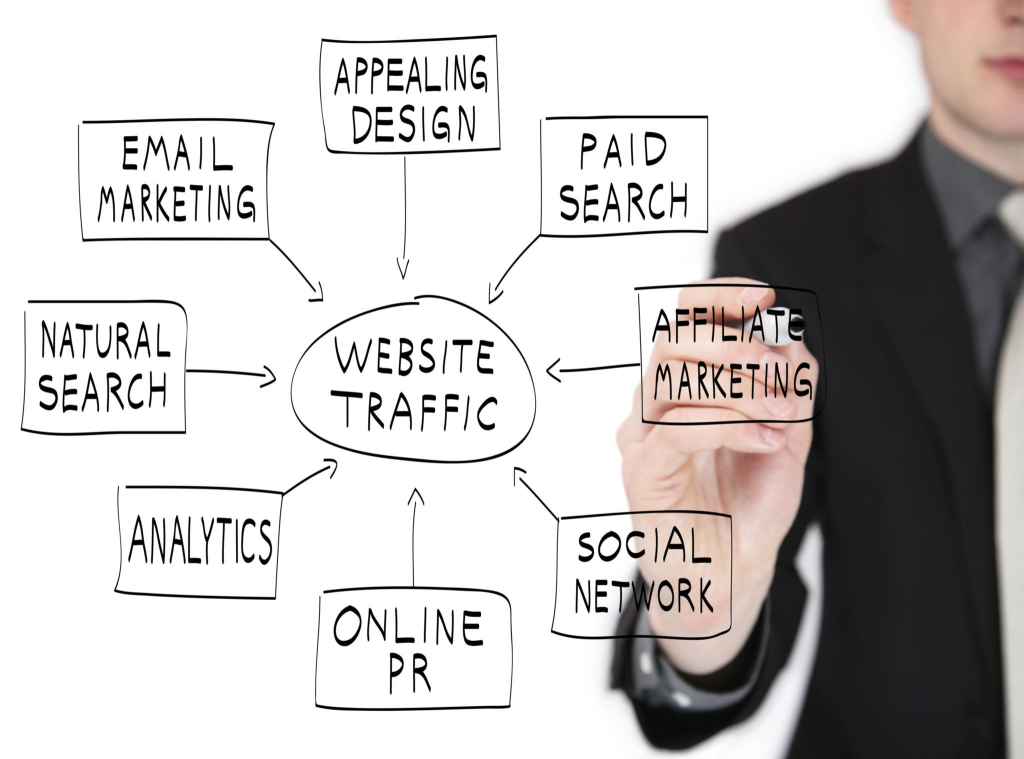
    image
    Mind Map

    There are over 1 billion websites on the internet. With no strategy, your website is just a needle in an enormous digital haystack.

    Digital marketing is about building the roads that lead customers to your door, whether it’s through SEO, Social Media Marketing, or Email Campaigns.

    • SEO ensures that, when a service you offer is typed into Google, your name pops up.
    • Social Media is your billboard in the space where people are spending their time.

    If you’re not marketing, you’re relying on luck. And luck is not a business strategy.

    So what’s a business strategy?? Business strategy is the overall plan for how the business will grow, generate profits, and compete.

    2. Turning Visitors into Loyal Customers with Digital Marketing

    A website is often static; it waits for people to visit. Whereas digital marketing is dynamic, it goes out and finds them.

    You can build a relationship before the client has even spent a dollar. This is through Marketing. You can answer their questions on Facebook, showcase your latest projects on Instagram, or share tips on LinkedIn. This is how you start building trust. When a customer finally lands on your website, they are no longer strangers but warm leads willing and ready to do business.

    3. Stop Shouting, Start Targeting with Digital Marketing

    Old-school advertising (like radio ads or billboards) is like standing in a crowded stadium with a megaphone. You are shouting your message to everyone, hoping a few interested people hear you. It is expensive and inefficient.

    Digital Marketing changes the game. It allows you to be precise.

    Instead of waiting for random visitors, we use tools to put your business directly in front of the people who are actually looking for it. We can target by location, interests, age, and even specific search terms. This means you stop wasting money on people who will never buy from you, and focus your budget 100% on your ideal future clients.

    Your website is a powerful vehicle for business growth, but it’s parked in the driveway. It is time to turn the key. Don’t let your digital investment go to waste. Let’s build the roads, fill the tank, and drive traffic to your business.

    At Elon’s Design, we don’t just “make things look pretty.” We function as Integrators. We understand that design and marketing must work together.

    A great marketing campaign that leads to a slow, broken website is a waste of money. A perfect website with no traffic is a waste of potential. You need the technical excellence of our web design paired with the strategic reach of our digital marketing.

    Ready to get started? Contact us today to discuss a custom digital marketing strategy that fits your goals.

    Email: [email protected]

    Call / WhatsApp: +254 724 636 436

    Prefer a quick chat? Book a 15-minute consultation, and we’ll recommend the top 3 actions you can take this month to lift conversions.   

  • From Noise to Noticed: Mastering AI Search Optimization for Brand Dominance

    From Noise to Noticed: Mastering AI Search Optimization for Brand Dominance

    For decades, keywords ruled visibility. Now, master AI Search Optimization to dominate results on ChatGPT, Perplexity, and Gemini. Brands built their entire empires on gaming this system, stuffing articles with search terms, chasing backlinks, and obsessing over technical SEO. But that era is ending. We are leaving the age of Search Engines and entering the age of Answer Engines.

    With the rise of AI models like ChatGPT, Claude, and Gemini, users are no longer looking for a list of blue links to sift through. They are looking for synthesized, immediate answers. This shifts the fundamental question for every business owner and marketer. When a potential customer asks an AI a question about your industry, does the AI know you exist? And if it does, does it recommend you?

    Surviving this transition requires a radical mindset shift. It is no longer about optimizing for the search (SEO), it’s about optimizing for the machine’s understanding (Generative Engine Optimization). To dominate, you must stop being “noise” in a busy digital landscape and start being the signal that commands the conversation. 

    Here are six ways to build a brand that AI-powered search simply cannot bypass.

    1. Deeply Understand Your Audience

    AI searches don’t just spit out random links; they look for the best answer. The first step in AI Search Optimization is to move beyond demographics and understand the specific questions, pain points, and desires of your audience. The goal is to create content that speaks directly to their needs, making you the primary source that AI recommends.

    Go Beyond Demographics to “Search Intent” To achieve this, you must analyze the intent behind the search, not just the keywords. Is your audience looking for a quick definition (informational intent) or a solution to a complex problem (transactional intent)? When you tailor your content to match the specific stage of the buyer’s journey, you signal to AI algorithms that your content is highly relevant. This precision prevents your brand from being filtered out as generic noise and positions you as a tailored solution provider.

     You must establish a continuous feedback loop to validate your understanding. AI is dynamic, and so are user behaviors. Utilize your customer support logs, social media comments, and sales inquiries to identify the exact language your customers use. When you mirror their vocabulary back to them in your content, you bridge the gap between their query and your solution. This semantic alignment is critical because AI models are trained to recognize patterns in language; speaking your customer’s “dialect” makes your brand easier for the AI to categorize and recommend.

    2. AI Search Optimization for Conversational Queries

    AI search engines thrive on natural language processing (NLP). Gone are the days when someone would simply type “best coffee machines.” Now, they ask complex questions like, “What is the best coffee machine for a beginner who wants espresso at home?” By optimizing for full sentences and question-based phrases, you position your brand as the “direct answer.” You need to anticipate the conversational flow, understanding that a user is likely looking for a dialogue, not just a list of links.

    To win at conversational search, structure is just as important as keywords. AI bots often scan for concise definitions and clear lists to generate their answers. Use the “inverted pyramid” writing style: start with the direct answer to the question immediately, then expand on the details. This increases the chances of your content being picked up as a “Featured Snippet” or the direct answer in a voice search result, effectively making you the voice of authority for that topic.

    Furthermore, you must anticipate the “follow-up” question. AI search experiences are often multi-turn conversations. If a user asks about “best coffee machines,” their next question might be “how to clean an espresso machine.” By clustering your content and linking related topics together, you create a “knowledge graph” on your own site. This helps AI understand the depth of your content, increasing the likelihood that it will keep users within your brand’s ecosystem for the duration of their entire search journey.

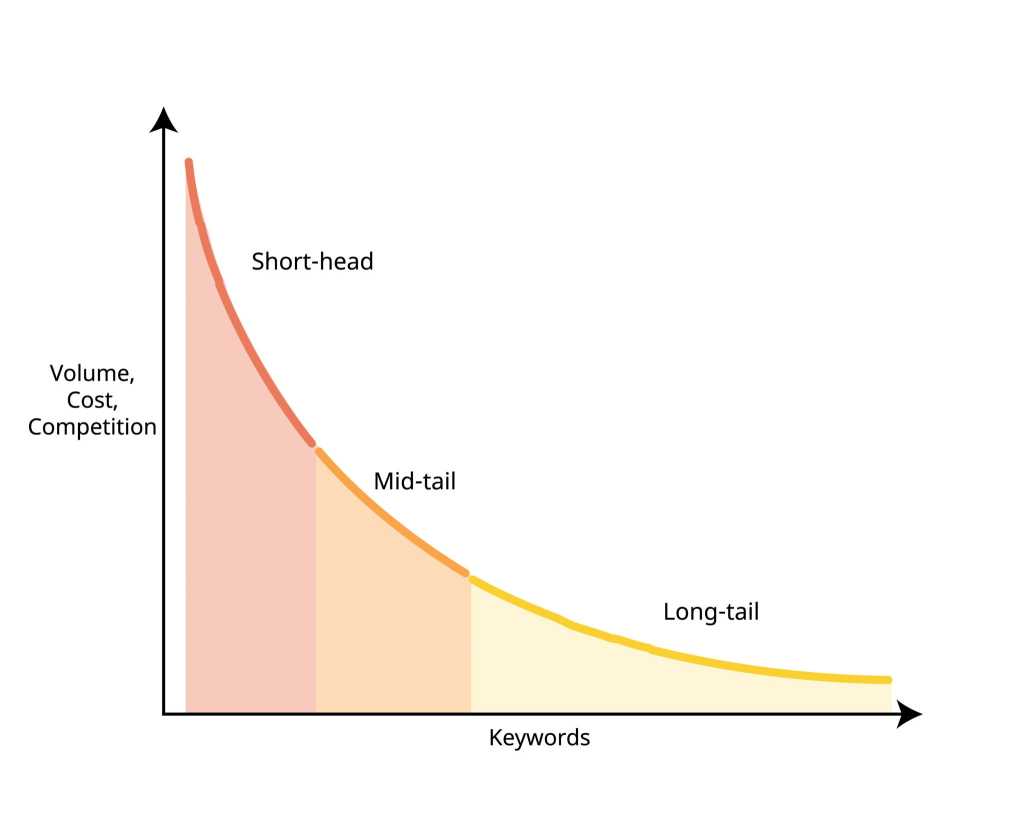
    image
    Search Demand Curve

    3. Establish Authority through E-E-A-T

    In the world of AI Search Optimization, credibility is king. Search algorithms now prioritize content based on E-E-A-T: Experience, Expertise, Authoritativeness, and Trustworthiness. Periodically publishing accurate, helpful, and well-researched content signals to the algorithms that you are a subject matter expert. It is not enough to just state facts; you must demonstrate that you have the background and the right to teach these facts.

    Building authority also requires looking outside your own website. AI systems judge your trustworthiness based on who else cites you. Focus on Digital PR strategies, such as getting quoted in industry publications, collaborating with other experts, or publishing case studies. When high-authority sites link back to you or mention your brand, it acts as a “vote of confidence” that AI algorithms weigh heavily when deciding which brands to trust and recommend.

    Additionally, pay attention to “Authorship.” AI models are getting better at identifying individual content creators. Ensure that your blog posts have clear author bylines with bios that highlight credentials. If the content is written by a recognizable expert in the field, AI is more likely to trust the validity of the information. By attaching a human face and reputation to your content, you differentiate yourself from the flood of anonymous, AI-generated spam that is currently clogging the internet.

    4. Embrace Multi-Platform Presence (Brand Mentions)

    Artificial intelligence pulls data from the entire internet, not just your website. It reads Reddit threads, LinkedIn comments, YouTube video transcripts, and social media posts. A dominating brand is seen wherever the audience is active, encouraging reviews and discussions that validate relevance. If your brand only exists on your website, you are invisible to a massive portion of the data that AI uses to form its answers.

    You must also optimize for “multimodal” search. Remember that AI is not limited to text; it understands images, video, and audio. Ensure your images have descriptive alt-text, your videos have accurate captions, and your podcasts have transcripts. By making your non-text content accessible to AI crawlers, you open up new pathways for discovery. If a user searches for a visual concept or a tutorial, your optimized video or infographic could be the primary result they see.

    Consistency across these platforms is the final piece of the puzzle. Your messaging, tone, and core value proposition must be aligned, whether a user finds you on TikTok, a podcast, or a blog. AI models look for patterns; if your brand information is contradictory across different platforms, it lowers your “trust score.” A unified brand voice reinforces your identity, making it easier for AI to synthesize a clear, accurate profile of who you are and what you offer.

    5. Engage through Storytelling and Personality

    While AI can easily process facts and data, it cannot replicate the human connection of a good story. Brands with a distinct voice and stories that evoke emotion stay top-of-mind. Storytelling ensures that even if an AI gives a factual summary of your product, the customer still seeks you out for the experience. It turns a transactional search into a relational interaction.

    In an era of automated content, emotional resonance is the one thing AI cannot fully simulate. Share behind-the-scenes struggles, customer success stories, and the “why” behind your business. When content triggers an emotional response, humans are more likely to share it. These social signals, shares, likes, and comments, are data points that AI notices. A highly shared story signals to the search engine that your brand is culturally relevant and impactful.

    Moreover, a strong brand personality acts as a defense mechanism against plagiarism. AI can scrape your facts, but it struggles to mimic a unique, nuanced brand voice without sounding derivative. By leaning into a specific tone, whether it’s witty, empathetic, or rebellious, you create a “moat” around your content. Users will learn to recognize your voice and prefer it over the dry, neutral summary provided by a chatbot, ensuring loyalty even in an AI-first world.

    6. Monitor and Adapt Your AI Search Optimization Strategy

    AI and search technologies are in a constant state of evolution. What worked today may not work tomorrow. Dominant brands must analyze trends, experiment with new formats like voice search or interactive tools, and adapt immediately to ensure visibility. Stagnation is the fastest route to irrelevance in a technological landscape that changes weekly.

    You also need to change how you measure success. Traditional “rankings” matter less when an AI provides a zero-click answer. Instead, focus on metrics like “Brand Lift,” “Share of Voice,” and direct traffic. Are people searching for your brand by name after interacting with an AI tool? Monitoring these new KPIs (Key Performance Indicators) will give you a truer picture of your brand’s dominance than simply looking at which position you hold on a Google results page.

    Finally, keep a close watch on the technical side of innovation. Tools like Schema Markup help you speak the AI’s language directly, organizing your data so it is easy for machines to parse. However, don’t get so lost in the tech that you forget the user experience (UX). AI recommends sites that are fast, mobile-friendly, and easy to navigate. By balancing technical innovation with a seamless user experience, you ensure that once the AI sends traffic your way, those visitors stay and convert.

    Brands cannot simply rely on old strategies in the era of AI search. To succeed, you must understand your audience’s intent, optimize for conversational queries, build authority through E-E-A-T, and maintain a vibrant multi-platform presence.

    Successful AI Search Optimization isn’t about being loud; it’s about relevance, trust, and humanness in a digital space where AI decides who gets noticed. By following these six strategies, your brand doesn’t just exist; it becomes the brand AI that your audience can’t ignore.

    Ready to future-proof your brand? Start by auditing your current content strategy today to see if you are answering the questions your audience is actually asking.
    Elon Designs is here to guide you every step of the way from analyzing your existing content to crafting a strategy that truly connects with your audience. We ensure your website not only looks modern and professional but also delivers the answers and solutions your visitors are searching for, turning curiosity into conversions.

    Email: [email protected]

    Call / WhatsApp: +254 724 636 436

    Prefer a quick chat? Book a 15-minute consultation, and we’ll recommend the top 3 actions you can take this month to lift conversions.   

  • AI Search Is Changing Everything: How to Optimize for ChatGPT, Perplexity, and Gemini

    AI Search Is Changing Everything: How to Optimize for ChatGPT, Perplexity, and Gemini

    For decades, the rules of online discovery were written by Google. We ventured over keywords, backlinks, and meta descriptions, all to climb that coveted SERP (Search Engine Results Page). But a great revolution has been underway, and it’s conversational. The rise of generative AI search tools like ChatGPT, Perplexity, and Gemini isn’t just an upgrade; it’s a complete shift in the way people think or assume they are normal. 

    Instead of a list of blue links, users are getting direct, synthesized answers. This fundamentally changes how people find information and, consequently, how creators, marketers, and businesses need to think about visibility.

    The question is no longer just “How do I rank on Google?” but “How do I become the source that these AI models learn from and cite?”

    Let’s break down how to optimize for this new age of search.

    The New Search Paradigm: From Links to Answers

    Traditional search is reactive; you type a string of keywords and sift through results. Meanwhile, AI search is proactive and conversational. A user can ask Perplexity, “Plan a 2-day trip to Masai Mara National Reserve for a tourist, considering the current economy in Kenya,” and get a planned trip schedule with links to their sources. 

    One of the current goals will be to make your content one of those trusted sources, which requires a shift from keyword stuffing to authority-building.

    Platform Specific Optimization Strategies

    1. Optimizing for ChatGPT and Other AI

    ChatGPT and similar chatbots are trained using massive datasets that are provided to them by their user and also the producers.

    • Focus on Long Tail Keywords: They target the actual and complex questions people are asking and create comprehensive content that answers not just the primary question but all the related sub-questions.
    • Create a definite “Source’ Content: A content creator should aim to create the most compelling, complete content resource on a topic.
    • Master the EEAT Principle:  This stands for Experience, Expertise, Authoritativeness, and Trustworthiness. Google has been emphasizing this for years, and it’s now critical for current AI. Be transparent.

    2. Optimizing for Google Gemini

    Google is integrating its Gemini AI directly into Search Generative Experience (SGE) 

    • Focus on Topical Authority: Google rewards sites that demonstrate deep expertise in a specific area. Create a hub of interlinked content that thoroughly covers every detail of your core topic. This includes technical SEO.
    • Implement the answer- first structure: For any page targeting an informational query, begin the main body of the content with a 2-4 sentence summary that provides the direct answer. Follow this immediate answer with your detailed explanation, steps, and examples. This structure makes it friendly for the AI to pull the core answer from its overview.
    • Double Down on User Intent: Google’s AI is mostly focused on satisfying the user’s intent. Analyze the search query; what are they looking for or comparing? Ensure your content matches that intent perfectly.

    3. Optimizing for Perplexity AI 

    Perplexity is a search engine at its core, but with AI-powered summarization. It places a huge emphasis inciting its sources, making it a prime opportunity for visibility.

    • The Citation is the New Click-Through: Your main goal is to be one of the linked sources under Perplexity’s answer. This means your content must be highly relevant and authoritative on the specific query.
    • Data-Driven Content: Perplexity excels at answering complex, research-oriented questions. It creates content backed by data, statistics, and recent studies. Ensures all your data and facts are accurate and up to date.

    Quality is Your Best SEO

    While the tools are changing, the fundamental principle remains: create exceptional content for humans. AI models are trained to recognize and reward the quality of content.

    The era of gaming the system with shortcuts is ending. The future belongs to creators, educators, and businesses that invest in becoming true authorities in their field. By optimizing for clarity, depth, and trust, you won’t just be optimizing for those AI, you’ll be future-proofing your online presence for whatever comes next.